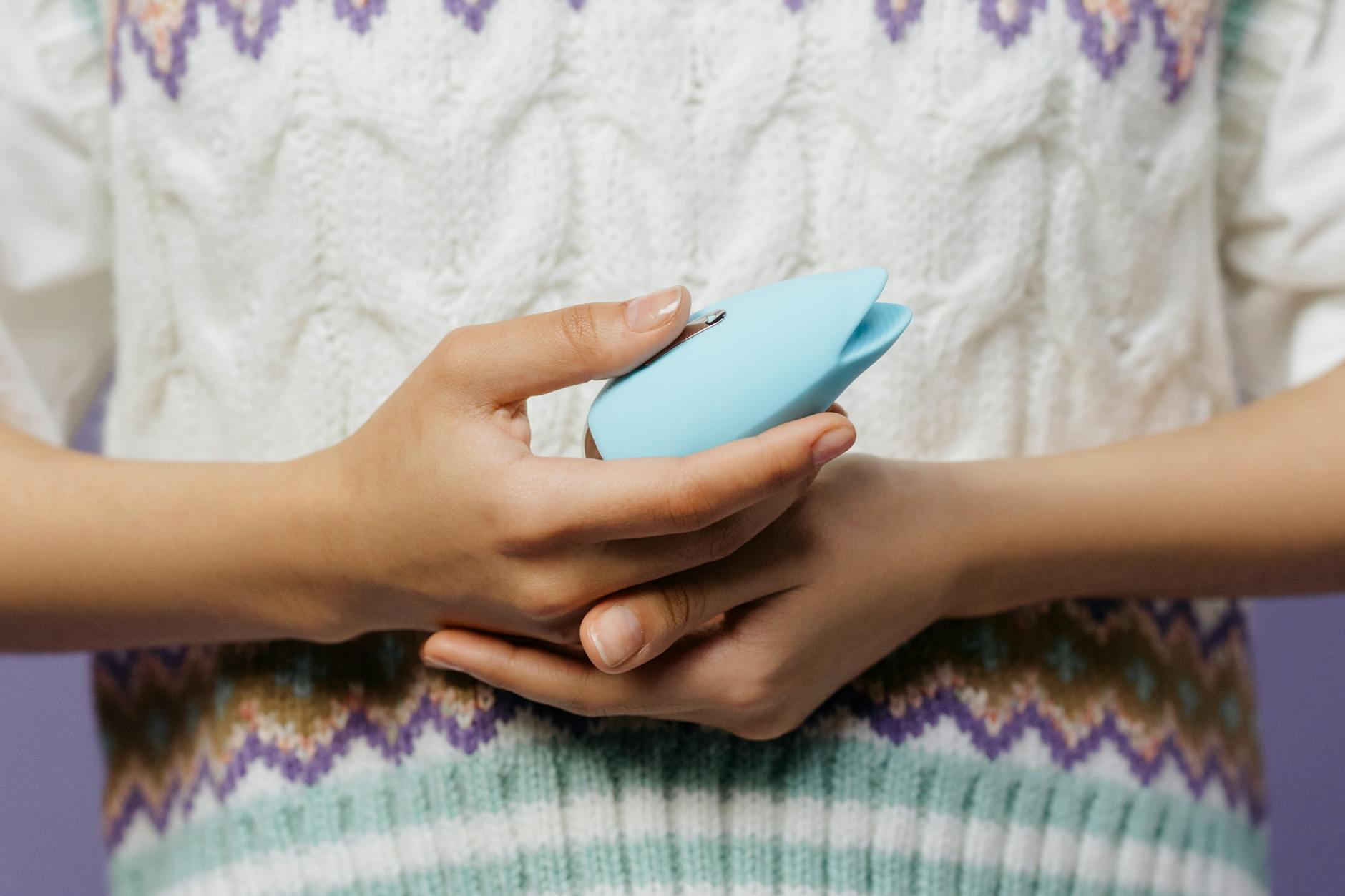
How to Use a Lemon Vibrator When Your Partner Pressures You for Faster Orgasms
The tension between wanting to please your partner and honoring your own orgasm timeline is real. Here's how a lemon clitoral vibrator—and honest communication—can reframe the whole dynamic.
Your partner wants sex to move faster. You want more time to get there. Nobody's wrong, but somebody's frustrated. This mismatch is one of the most common relationship conflicts I see in couples therapy, and it rarely has anything to do with arousal capacity or desire. It's almost always about pressure—the pressure you feel to perform on someone else's timeline, and the pressure your partner feels watching you struggle to climax when they're already ready.
A lemon vibrator (or lem vibrator, if you prefer) can change the mechanics of this entirely. But only if you use it for what it actually is: a tool for YOUR pleasure, not a race-horse to speed you up for someone else.
Here's the neuroscience part. Orgasm requires the parasympathetic nervous system to take over—your "rest and digest" mode. Pressure, performance anxiety, and clock-watching do the opposite. They activate your sympathetic system—"fight or flight." When your partner is waiting, checking the time, or (even if they don't say it) radiating impatience, your brain knows. Your body locks down.
Then you take longer. Your partner gets more frustrated. You sense it. Your body locks down harder. It's a spiral that ends with both of you feeling bad.
This isn't a flaw in you. This is your nervous system doing its job—protecting you from the discomfort of performing under pressure.
A lemon clitoral vibrator works differently than traditional vibrators because it uses suction and subtle pulse patterns instead of direct, intense vibration. That matters here because it changes the locus of control.
When you're using a lem vibrator solo or with your partner present, you're building arousal on your own timeline. The suction sensation is consistent—it doesn't require you to chase intensity or worry about losing the feeling. You can stay present in your body instead of monitoring your progress or watching for signs of your partner's patience wearing thin.
More importantly, you can ask your partner to step back (literally or emotionally) while you use it. That boundary alone often breaks the pressure cycle.
Before you introduce a lemon vibrator into your sexual routine, you need to separate two things: the mechanical issue and the relational issue.
The mechanical issue is: "My body takes 20 minutes to reach orgasm. That's normal for me." This is a fact, not a negotiation. It doesn't mean you're broken or need to be "fixed."
The relational issue is: "When I feel rushed, I can't relax enough to climax at all. So when you watch and wait, it actually makes things worse." This is about your partner's behavior, not their intention.
Most partners don't realize the effect they're having. They think they're being supportive or show interest. When you explain the neuroscience ("My body literally can't orgasm when I feel observed pressure"), it reframes the issue as something you're solving together, not something you're failing at.
Then comes the boundary: "I need you to trust my timeline. When I use a lemon vibrator, I need you to step back—literally leave the room, or turn away—until I'm close. Then you can come back if you want." Many partners find this relief. They get to opt out of the waiting-and-watching part, which is often boring or anxiety-producing for them too.
Start fully clothed. Use the lemon vibrator over your underwear first. This removes any pressure for them to be doing something simultaneously (penetration, manual stimulation, etc.). They can just be present—kissing you, talking to you, paying attention to your face instead of your genitals.
This small shift changes everything. They're not timing you. They're not waiting for a signal. They're just connecting with you while you do the work of building arousal.
Set a pressure-free expectation beforehand: "I might take 15 minutes. I might take 30. I don't know until I'm there. Don't ask how close I am. Just be with me." Partners often ask "Are you close?" as a way to check progress. Ban this question. It yanks you out of your body and back into performance mode.
Use your lemon clitoral vibrator on lower settings first. Start at pattern 1 or 2 on the Lem and let your arousal build gradually. You're not sprinting toward orgasm. You're creating an environment where it can happen without force.
Let's be honest: you might climax faster and more reliably alone. This is not a failure of your relationship. It's data. Some people need total privacy to relax fully. If that's you, honor it.
Using a lem vibrator solo regularly—maybe a few times a week—isn't a workaround. It's a form of self-knowledge. You're learning what your body needs and building confidence that you can reach orgasm without external pressure. That confidence then carries into partnered sex.
Some couples also use it as foreplay: you start solo with your lemon vibrator for 5-10 minutes while your partner watches (if that doesn't feel like pressure), then they join in once you're aroused. This removes the expectation that partnered touch will get you all the way there.
Sometimes partners struggle with the idea that they need to step back or wait. They might say things like: "But I want to make you come," or "Isn't using a vibrator just... easier?" These are fair questions, and they deserve direct answers.
"Yes, a lemon vibrator is more efficient at giving me an orgasm. That's partly why it exists. But 'efficient' and 'connected' aren't the same thing. Using it while you're present is a way for us both to feel good without pressure." This reframes it as collaboration, not replacement.
If your partner continues to resist or pressure you to climax faster, this is a sign of a larger relational issue. You might benefit from a few couples therapy sessions to work on respect for your body's timeline and your partner's ability to tolerate not being the one "giving" you pleasure. How to Use a Lemon Vibrator With Your Partner After Taking a Sexual Break covers this renegotiation in more depth.
Over time, using a lemon clitoral vibrator in your partnered sex life can actually deepen intimacy. Your partner learns that your pleasure has its own rhythm. You learn that asking for what you need isn't selfish. You both learn that orgasm isn't a performance metric.
Many couples report that once the pressure lifts, orgasm comes faster anyway. This is because you're no longer in sympathetic overload. Your nervous system can actually do its job.
Your orgasm timeline is yours. A lem vibrator is a tool to honor that timeline, not rush it. And the right partner is someone who gets that.
Performance pressure activates your sympathetic nervous system (stress response), which directly inhibits orgasm. Your brain perceives observation as evaluation, even if your partner means well. This is neurological, not psychological weakness. Solo or low-pressure partnered sessions often feel faster because your nervous system isn't in defensive mode.
Partially. A lem vibrator gives you a tool to climax independently, which can break the pressure cycle. But if your partner's impatience comes from deeper issues—insecurity, entitlement to your pleasure, or disrespect for your autonomy—the vibrator alone won't fix the relationship dynamic. Couples therapy may be necessary.
Completely. Most people with vulvas take longer to reach orgasm than most people with penises. This isn't dysfunction. It's variation. The "problem" only exists when someone expects it to be otherwise.
Embarrassment often comes from internalizing the message that your body is wrong. It isn't. Start by using the vibrator solo until you feel confident in your response. Then, when you introduce it to partnered sex, frame it as an exploration, not a confession. "I want to try using this together" is different energy than "I'm sorry I'm so slow."
This is worth unpacking. Their hurt might be: "I'm not enough to satisfy you." But the truth is: "I need clitoral stimulation to orgasm, and my body is slow to warm up under pressure. A lem vibrator isn't a replacement for you. It's a way for us both to feel good." Reframing helps. Some partners also benefit from understanding that clitoral stimulation is completely different from penetration—you're not comparing; you're complementing.
Technically yes, sometimes. But I'd caution against it as a long-term strategy. Using a tool to accommodate pressure—rather than addressing the pressure itself—can build resentment. You'll feel like you're working to fix something that isn't broken, just different. Better to set the boundary first, then use the vibrator because you want to, not because you're trying to meet someone else's timeline.
Your orgasm timeline belongs to you. A lemon vibrator is a way to honor it—and to show your partner that pleasure isn't a performance metric. The real shift happens when you both agree that your body's pace is non-negotiable and that working with it (not against it) is what actually brings you closer.