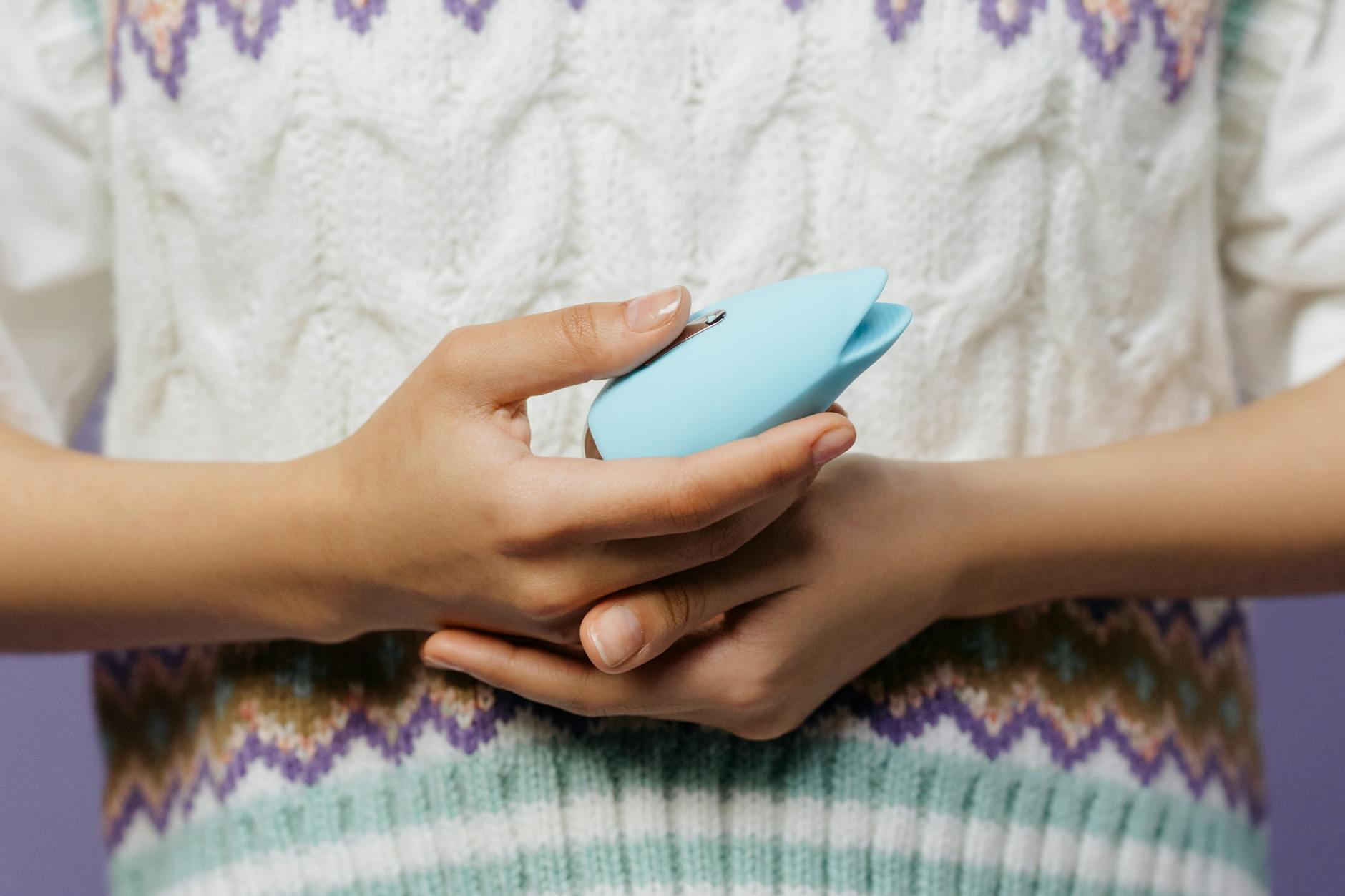
Whether it's been three weeks or three years, restarting intimacy with a partner after a break carries its own particular anxiety. You're not sure if your bodies still fit together the same way. You're worried about performance. You're wondering if desire is even still there, or if it got packed away so long ago that unpacking it feels like meeting a stranger.
Here's the clinical truth: the break itself doesn't kill desire. But the silence around it does. Most couples who take unplanned time away from sex don't actually talk about how to come back to it. They wait for it to "happen naturally," which usually means it doesn't happen at all.
A lemon clitoral vibrator changes that math. Not because it magically resurrects passion, but because it gives you both something concrete to focus on instead of the pressure to perform. It's a tool. It's permission. It's also weirdly sexy.
I've worked with hundreds of couples navigating this. The reasons are usually the same: kids, illness, work stress, moving, grief, medical recovery, burnout, or just the slow drift that happens when you stop touching each other.
What surprised me early in my practice is how rarely the break itself is the problem. The problem is the shame afterward. People assume that if sex stopped, it's because the relationship failed. That's almost never true. Sex stops because life got loud. When you turn the volume down, it usually comes back.
The catch is that the longer the break, the more both partners need explicit permission to restart. Without it, you're both waiting for the other person to make the move, and nothing happens.
Don't start with sex. Start with honesty. Tell your partner:
That you want to reconnect physically.
That you know it might feel awkward at first.
That you don't expect it to look like it did before.
That you're open to tools, slowness, and experimentation.
This last part is crucial. Mentioning a lemon vibrator in this conversation isn't a threat. It's an invitation. Framed right, it says: "I want us to feel good again, and I'm willing to try something new to get there."
If your partner is hesitant, ask why. Sometimes it's insecurity ("Will I be enough?"). Sometimes it's genuine disinterest in toys. Sometimes it's that they feel disconnected from you in other ways first. All of these are real conversations to have before you bring anything into the bedroom.
Your first time back won't be the best time. It probably won't even be very good. And that's fine.
The lemon vibrator works best in couples' hands when both people understand that the goal isn't orgasm. The goal is touch, attention, and rebuilding the habit of pleasure together. Orgasm will come later. Right now, you're relearning how to be present with each other.
I typically recommend starting with non-penetrative touch only. Hands, skin, maybe some kissing. Let your partner explore the lemon vibrator on you first, at low settings, with lots of communication. This serves two purposes: it reminds you both that sensation is available, and it shifts power dynamics away from performance toward service. Your partner gets to give you pleasure. You get to receive it and tell them what feels good. That's an entirely different conversation than either of you being "tested."
Honestly though, structure helps when you're nervous. Here's what I recommend:
Set a time. Not "someday when we're in the mood," but a specific evening. This removes the question of readiness and makes it an appointment with each other.
Undress slowly together. No rushing. Acknowledge the strangeness if it's there. "This feels new" is honest and human.
Start with touch only. Five to ten minutes of kissing, skin contact, no goal. This activates the nervous system and builds trust.
Introduce the lemon vibrator on low setting. One partner holds it. The other receives. Start with external stimulation only. Use water-based lubricant. Go slow. If sensation feels dulled from time away, this is normal and temporary.
Talk during. "Does this feel good?" and "Want me to try something else?" remove the guesswork. Your partner isn't a mind reader, and honesty here builds the foundation for future sessions.
Don't chase the orgasm. If it happens, great. If it doesn't, you still got something valuable. You got your bodies in the same room. You got communication. You got permission to want each other again.
Okay, so it's probably going to feel weird at first. Maybe awkward. Maybe like you're relearning someone's body, because you are.
Here's what I tell couples: awkwardness is actually data. It tells you what needs attention. Maybe it's that you need more foreplay than you used to. Maybe it's that your sensitivity has shifted. Maybe it's that your partner needs reassurance that you still find them attractive. These aren't failures. They're information.
The lemon vibrator is helpful here because it depersonalizes some of the pressure. If sensation feels off, you can blame the toy instead of yourselves. "My clitoris feels less responsive" becomes "Let's try a different setting" instead of "What's wrong with me?" This small reframe is often the difference between couples resuming intimacy and pulling away again.
If awkwardness turns into genuine avoidance, that's different. That usually signals that something else in the relationship needs work first. Sometimes couples need emotional reconnection or a conversation about what caused the break before physical reconnection makes sense. There's no shame in that. Bringing in a couples therapist at that point isn't a failure. It's smart.
Once you've had a successful session or two, the question becomes: how do you make this a habit again instead of a one-off experiment?
Don't wait for spontaneous desire. Most couples who take a break can't afford to wait for that. Instead, aim for once a week at minimum. This doesn't have to be long. Twenty minutes is enough. It doesn't have to be complicated. Sometimes it's just you, your partner, and a lemon vibrator on low.
What matters is consistency. Consistency rebuilds the neural pathways between you. It reminds your body that pleasure is available. It reminds your partner that you want them. After time away, this is crucial.
You can also vary the approach. One session is just you receiving. Next week, your partner receives. Another week, you explore using the lemon vibrator together during penetration, if that's part of your practice. The variation keeps it from feeling mechanical.
One partner has more desire to restart than the other. This is normal and common. The solution is patience plus small agreements. "Can we commit to trying this twice a month for the next two months?" creates a container without feeling like pressure.
The break has revealed deeper incompatibility. Sometimes a sexual break exposes that the relationship itself has issues beyond just time away. Differences in desire, orientation, or commitment might come up. These need direct conversation, possibly with a therapist.
Using the lemon vibrator feels vulnerable or exposing. Talk about this. Ask your partner what specifically feels vulnerable. Is it being watched? Is it the vibration? Is it asking for what feels good? Identify the specific discomfort and address it rather than abandoning the tool.
Sensation feels numb or distant. This is common after a long break, especially if there was stress involved. Give your body permission to warm up slowly. Lower sensation usually returns within a few sessions of regular touch. If it doesn't after a month, check in with your doctor.
All of this structure might feel like the opposite of sexy. It's not. The couples who restart best are the ones who treat it like a project they're solving together, not a test one person is administering to the other.
Bring lightness to it. Laugh if you feel awkward. Make jokes. Keep a sense of play. The lemon vibrator is a tool, but it's also permission to be a bit silly together again. That's valuable.
You're not trying to recreate what you had before the break. You're building something new that accounts for the people you are now. That's actually better.
Most couples start feeling more natural within three to four weeks of consistent, low-pressure intimacy. The nervous system takes about that long to remember that this space is safe. That said, "comfortable" varies wildly. Some people feel it after two sessions. Others take months. The timeline matters less than consistency. If you're touching each other regularly without judgment, comfort will follow.
I'd say wait for one or two sessions of hand-only touch first. This lets your bodies adjust to being intimate again without a tool involved. After that, introducing a lemon clitoral vibrator is actually easier than you'd think because it shifts focus away from performance and onto sensation. It's a helpful transition point.
This is real and worth addressing directly. Ask your partner what the insecurity is specifically. Often it's "Am I not enough?" The honest answer is that the vibrator isn't about you not being enough. It's about your pleasure mattering enough that you both want to optimize it. Frame it as "I want to feel good with you," not "I need this instead of you." If your partner remains uncomfortable, don't force it. There are other ways to restart intimacy.
Lead with vulnerability, not need. "I miss feeling close to you" hits different than "We need to have sex." Then offer a specific, low-stakes suggestion. "Could we spend some time touching each other this Saturday night?" makes it concrete and removable from the weight of the word "sex." Sometimes just renaming it helps.
Yes. Absolutely. You're reconnecting with parts of your body and your partner that have been dormant. That can bring up grief, relief, joy, or even anxiety all at once. Let yourself feel it. If tears come, they're data too. They usually mean something good is happening, even if it doesn't feel that way in the moment.
That suggests there's something else going on beneath the surface. Maybe resentment. Maybe you're still avoiding what caused the break in the first place. Maybe you need support to address the root issue. A couples therapist can help you identify what's really blocking you. Sometimes the block isn't sex at all. Sometimes it's that you haven't actually resolved what happened before the break began.
A break doesn't end your intimate life. But silence about the break can. Naming what happened, talking about how to move forward, and actually showing up consistently together is what rebuilds desire. A lemon vibrator is just the thing you use while you're doing the actual work, which is showing up for each other.
Your partner is probably feeling just as uncertain as you are. You're not starting from nothing. You're starting from history, from knowing each other, from having chosen each other once. That's actually a lot to build on.
Restart slowly. Talk openly. Touch each other without shame. The rest will follow.