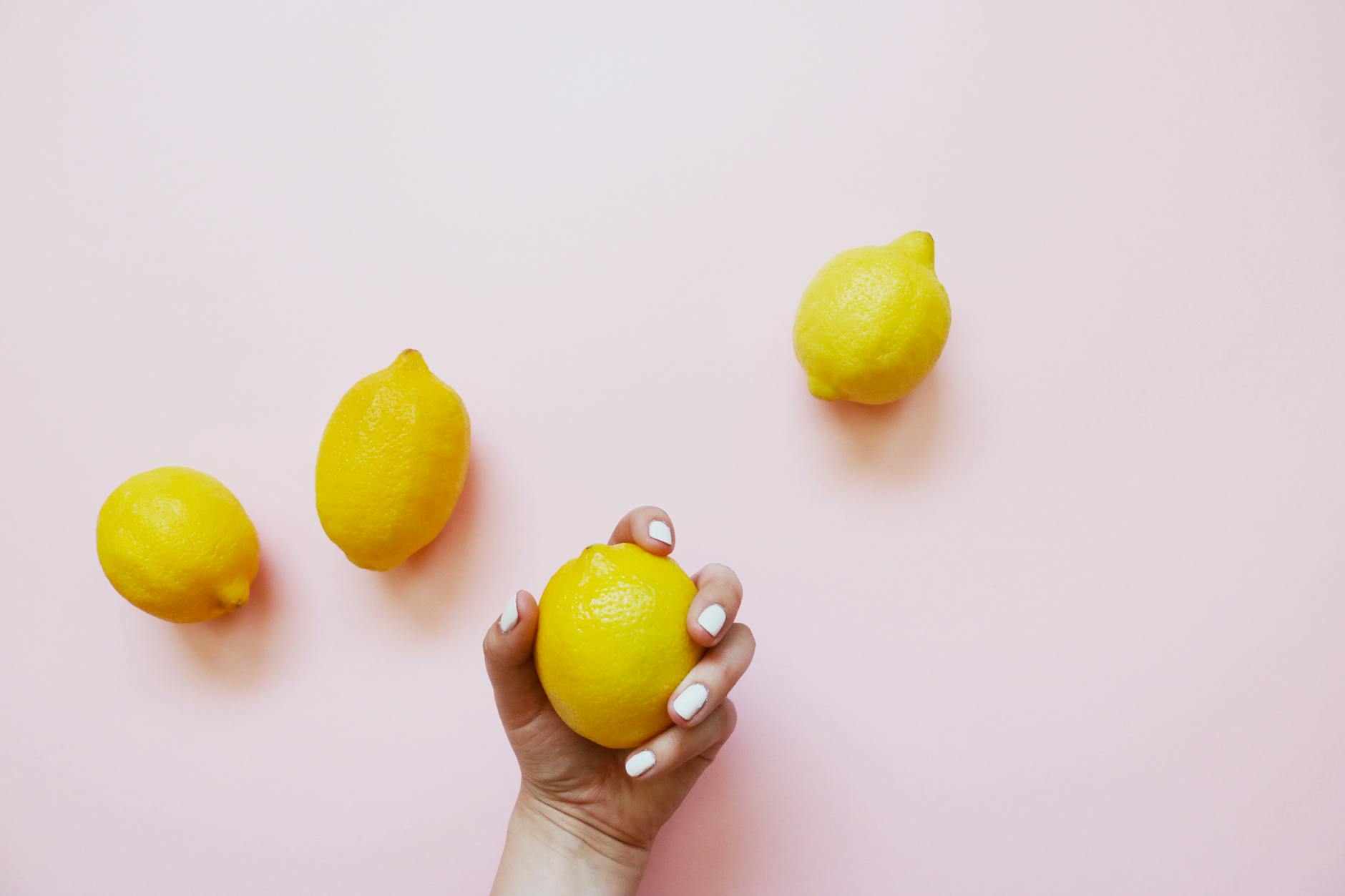
How to Use a Lemon Vibrator When You're Anxious About Pleasure After Time Away
That voice saying you've forgotten how, or that it won't feel the same? It's anxiety, not truth. Here's how to quiet it and rediscover what you've been missing.
Time away from pleasure creates anxiety. Not shame, not just awkwardness, but actual nervous-system activation. Your brain has essentially filed away the muscle memory, the neural pathways, the muscle tone of arousal. And the longer the pause, the louder the voice saying: "You've forgotten how. Your body won't respond. It won't feel the way it used to."
Here's the truth: none of that is actually true. But your nervous system believes it, and that belief is what blocks you now.
I work with people navigating this transition constantly. They've taken a break for health reasons, relationship rebuilding, medical recovery, depression, life chaos. They're ready to come back. And they hit this wall of anxiety that feels like a physical barrier. The good news is that it's one of the most addressable obstacles in pleasure work.
Your nervous system has two gears relevant here: sympathetic (fight-or-flight) and parasympathetic (rest-and-digest). Pleasure lives in parasympathetic. Anxiety lives in sympathetic.
When you approach yourself with the thought "Will I still be able to come?" or "What if sensation doesn't work the way it used to?" your sympathetic nervous system fires. Your heart rate rises. Blood flow redirects from your genitals to your limbs. Your pelvic floor tightens as a protective response. You become physiologically less capable of the very thing you're trying to do.
It's not a personal failure. It's biology. And it's completely reversible.
The anxiety also creates what I call "performance pressure." You're not exploring; you're testing. You're waiting for proof that you still work. That mindset alone kills the neurochemistry of arousal faster than anything else.
This is where a lemon clitoral vibrator becomes genuinely useful. Not because it magically solves anxiety, but because suction stimulation works with your nervous system instead of against it.
Traditional vibrators require more direct pressure and active sensation. If you're already tense and nervous, that sensation can feel jarring or too intense. Suction is gentler. It doesn't demand the same level of tissue responsiveness. It works through gentle, rhythmic pressure that actually helps your pelvic floor relax.
Here's the protocol: Set aside 15 minutes when you're not performance-testing. You're not trying to orgasm. You're not trying to prove anything. You're gathering data on how your body currently feels. Softness is the entire job.
Start with the Lem on the lowest setting. Use it for 2-3 minutes, no goal in mind. Notice what you notice: warmth, tingling, nothing yet, confusion, relaxation. All of those are valid data points.
Anxiety about pleasure after time away is less about your body and more about your relationship with your body. You've spent months or years believing a story: "I can't do this right now." That story is protective. It kept you safe when you needed it.
But it also becomes the truth you live inside if you don't actively revise it.
Here's what I recommend to clients: separate the narrator from the observer. The narrator is the anxious voice saying "This won't work, you've forgotten, it's different now." The observer is the part of you that can watch that voice and notice it without believing it.
When you're using a lemon vibrator and the narrator shows up with doubt, name it. "There's the anxiety voice. It's doing its job, trying to keep me safe. I'm going to notice the feeling instead."
That simple shift from identification to observation dampens anxiety's power immediately. You're not fighting it. You're not pretending it's not there. You're just declining the invitation to believe it's true.
One reason anxiety persists after time away is that your tissues and nerves actually do need a brief reconditioning period. This isn't permanent damage. It's more like muscle memory.
If you haven't been touched in months or years, your nervous system is unfamiliar with the sensation pathway. It's not broken. It needs gentle, repeated exposure.
The Lem's suction technology is excellent for this because you can control the intensity and duration precisely. You're not fighting vibration frequencies you can't adjust. You're coaxing your nervous system back into familiarity.
Week one: 2-3 sessions, 2-3 minutes per session, lowest setting.
Week two: 3-4 sessions, 3-5 minutes per session, lowest to medium.
Week three and beyond: extend duration and explore settings as sensation becomes less novel and more familiar.
This isn't rushed. This is how your nervous system recalibrates. The anxiety that says "It should be instant again" is the same anxiety sabotaging you. Patience is not settling. It's strategy.
Many people returning to pleasure after a break carry a secondary narrative: "My body abandoned me" or "I should have maintained this" or "I'm broken because I needed a pause." These stories are not accidental. They're adaptive. Your brain attached shame to justify why you stepped away.
But they're also completely in the way now.
If you have a partner, this is worth naming explicitly. "I'm anxious about pleasure again because I've been away from it. That anxiety is making it harder to access sensation. I need us both to know that this is normal and this is temporary."
If you're solo, the conversation is with yourself. "My body didn't betray me by needing a break. My body protected me. Now I'm asking it to open again. Anxiety is the guardian at the gate. But the gate still opens."
You might want to journal on this: What story am I telling about what my pause means? Is that story actually true, or is it protective? What would I believe about my body if I let go of that story?
If you're rebuilding pleasure with a partner, the temptation is to make this a shared project immediately. You're not alone in it. That feels safer.
But it actually works better if you spend 1-2 weeks rebuilding solo confidence first. You need to know that your body still responds to sensation without the pressure of another person present or waiting for results.
Once you've had 3-4 sessions where you felt nothing catastrophic happened, where you noticed sensation returning, where anxiety diminished slightly, then you can bring your partner in. That's when you introduce a lemon clitoral vibrator to shared intimacy.
The shift changes everything. You're no longer testing yourself. You're sharing an experience. Anxiety naturally decreases in that context.
If you're on an SSRI or other medication that affects sensation, anxiety after time away often carries an extra layer: uncertainty about whether the medication is the barrier or whether your nervous system is.
This is worth discussing with your prescriber. Some antidepressants are genuinely harder on libido than others, and sometimes the solution is a tiny dose adjustment or switching timing. Sometimes it's not. But you deserve to know what variable you're actually managing.
A lemon sucker like the Lem can sometimes feel gentler on medication-affected sensation precisely because suction doesn't require the same tissue responsiveness as vibration. But that's not a workaround. It's a tool while you sort the medical piece.
Here's what anxiety wants to hear: "Proof that nothing bad will happen." Your rational mind can offer that proof all day. Anxiety doesn't listen to reason.
What actually works is evidence through experience. You need to gently, repeatedly, slowly prove to your nervous system that sensation is safe again. That your body still responds. That nothing catastrophic happens if you try.
Each small session is that evidence. You're not rebuilding pleasure in a single experience. You're rebuilding trust in your body's capacity for pleasure through dozens of small, gentle moments of "This is okay. This is safe. This still works."
The lemon vibrator becomes the tool that makes those moments both accessible and genuinely pleasant rather than stressful. It's not the hero of the story. You are. The device is just the vehicle for you to gather your own evidence.
I say this to people coming back from pleasure breaks constantly: the fact that you're returning at all means something shifted. You're ready. Your body knows it. Your nervous system is anxious because it's preparing to reopen something that was in protective shutdown.
That anxiety is not a sign you're doing it wrong. It's a sign you're doing the brave thing.
Six weeks from now, you won't remember the anxiety this clearly. You'll just remember that you came back. That your body works the way it always did. That patience paid off.
Absolutely. When your sympathetic nervous system is active, blood flow reduces to your genitals. Your pelvic floor tightens as a protective response. Your nervous system becomes hypersensitive to stimulation, making sensation feel either nonexistent or too intense. This isn't psychological. It's neurophysiological. The good news: it's fully reversible with gentle, repeated exposure.
It varies widely, but I usually see clients move past the acute anxiety phase in 3-4 weeks of consistent, gentle exploration. That doesn't mean you're "fixed." It means your nervous system has gathered enough evidence that sensation is safe again. The deeper trust takes longer, but the panic usually settles fast.
Start alone. Get your nervous system comfortable with sensation without another person's expectations in the room. Once you've had 3-4 solo sessions where you felt calm exploring, bring your partner in if you have one. That order reduces performance pressure dramatically.
Nothing is actually useful information. It means your nervous system is still protective. That's not failure. Continue with short sessions, lowest setting, no goal except gathering data. Sensation usually returns as anxiety decreases. If numbness persists beyond a few weeks, that might be worth flagging to your doctor, especially if you're on medication.
No. Your nervous system needs gentle, repeated exposure to sensation. The lemon clitoral vibrator supports that through adjustable suction rather than aggressive vibration. But the real work is patience and releasing the expectation that it should be instant. Some people move through this in weeks. Others take months. Both are normal.
Not while the anxiety is active, because anxiety and arousal use opposing nervous-system states. But here's the shift: as you use the Lem consistently and your nervous system collects evidence that sensation is safe, anxiety naturally decreases. The orgasm isn't the goal yet. Calm exploration is. Orgasms return when anxiety does.
Your body remembers pleasure before your mind does. Your nervous system is primed to return. The anxiety isn't proof that you've lost something. It's proof that you're asking yourself to open again, and your system is being cautious. That's actually wise.
Give yourself time. Use a tool that works with you, not against you. Trust the small sessions more than the big expectations. Your pleasure is waiting. It's just rebuilding its home in your body slowly, carefully, and that's exactly how it should be.
Want to talk through what coming back might look like for you specifically? Reach out to us. We're here for exactly this conversation.