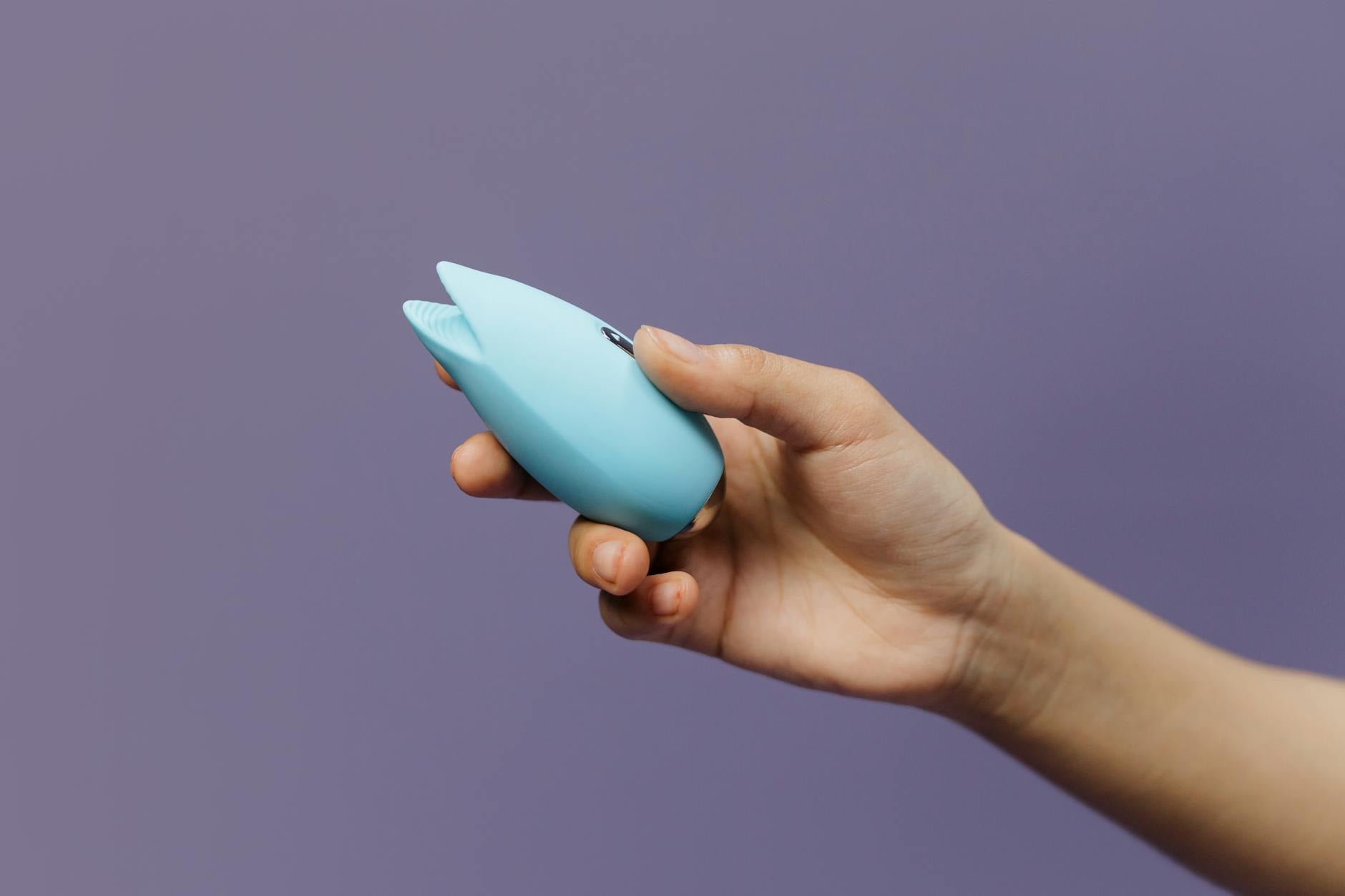
You've taken time off. Maybe it was weeks, maybe months. When you finally pick up your lemon vibrator again, something feels different. Not in a good way. The sensation that used to feel amazing now feels like too much. Too sharp. Almost painful. Your first thought is probably that something's wrong with the toy. The second is that something's wrong with you. Neither is true.
What's actually happening is that your nervous system has recalibrated in your absence. Your nerve endings haven't forgotten pleasure. They've just gotten quieter. When you reintroduce stimulation, especially something as direct as a lemon clitoral vibrator, it can feel jarring instead of pleasurable.
This is fixable. And it happens more often than you'd think.
Here's the neurological piece. Your body's sensitivity isn't a fixed dial. It's responsive. When you stop using a vibrator for a while, your clitoral tissue becomes less accustomed to that specific type of stimulation. Your nerve pathways are still there. They're not damaged. They're just in a lower baseline state.
When you jump back to the setting you used to love, your nervous system experiences it as a spike rather than a continuation. It's like turning up the volume on a song when you've had the sound muted for months. Not just louder. Startling.
Add to that the fact that many lemon vibrators are designed with a strong suction mechanism. The Lem works through air-pulsation technology that's significantly different from traditional vibration. If you've been away and you're reintroducing yourself to a lemon clitoral vibrator for the first time after a break, you're not just recovering sensation. You're learning a new toy's logic.
Seriously. Not setting three. Not the medium you think you remember. Setting one.
Most lemon adult toys have at least five intensity levels. The lowest setting on a quality lemon vibrator like the Lem is still meaningful stimulation. You're not wasting time with a wimpy sensation. You're giving your nervous system a chance to wake up gradually.
Spend at least three to five solo sessions at setting one before you move to setting two. I know that sounds slow. It's not. It's efficient. You're building familiarity and letting your nerve endings reacclimatize without the shock of overstimulation shutting down your responsiveness entirely.
Think of it like returning to exercise after an injury. You don't go back to your old weights on day one. You go lighter and let your system adapt.
This is true anytime, but it's especially true when you're recalibrating. Lubrication doesn't just feel good. It distributes pressure more evenly across tissue, which means the same amount of stimulation feels less intense and more pleasurable.
Water-based lube is your friend here. Silicone-based can feel richer, but it interacts oddly with silicone toys and can be harder to clean off. Use a generous amount at the start of each session. It'll dry slightly as you go, and that's fine. You can add more mid-session if you need to.
When sensation feels too strong, lube is often the easiest adjustment. More lube equals more diffusion of the stimulation. Less shock. More pleasure.
Don't skip straight to the lemon vibrator. Spend ten to fifteen minutes on non-tool foreplay first. That could be manual stimulation with your hands, partnered touch if you have one, or just time thinking about something that turns you on. The goal is to get blood flowing to your genitals before you introduce a vibrator.
When your tissue is properly aroused, it's more receptive and less sensitive to sharp sensations. It sounds counterintuitive, but an aroused clitoris actually tolerates vibration better than a non-aroused one. You're giving your nervous system context for the sensation.
Then start the vibrator. At setting one. With lube.
Here's where I lose some readers. You might need two to four weeks to get back to where you were before the break.
I'm serious. It's frustrating. You remember what felt good. You want to get back there fast. But pushing past discomfort doesn't rewire your nervous system faster. It does the opposite. Overstimulation creates a protective response. Your body tightens up. Your mind starts associating the toy with something unpleasant instead of something you want.
If you use your lemon vibrator twice a week at a patient pace, your sensitivity will normalize. If you use it daily at a challenging intensity, you risk developing an aversion to the sensation itself.
The people who recover their pleasure fastest are the ones who are willing to go slow for the first few weeks. It's counterintuitive. It works.
If after two weeks at setting one you're still finding the sensation too strong, something else might be going on.
First, check for infection or tissue irritation that's unrelated to the vibrator. Yeast infections, irritant contact dermatitis, or inflammation from other causes will make any toy feel overwhelming. If you've been away from sexual activity for months, especially if there was stress or health stuff happening, your tissue might need a minute to rebalance on its own before toy play.
Second, consider whether the sensation is physically overwhelming or emotionally overwhelming. These feel the same but require different solutions. If you're finding yourself tense or anxious when you use the vibrator, the intensity might be fine and the anxiety might be the real issue. When desire feels disconnected from your body, taking the vibrator completely off the table for another week or two and focusing on non-genital connection can help.
Third, if the intensity genuinely won't stop feeling wrong, you might need a different type of stimulation altogether. Not everyone comes back to the same tool. A lemon vibrator works beautifully for some nervous systems and not at all for others, especially in recalibration mode. A wand vibrator or even manual touch might feel better. That's not failure. That's information.
The more important thing happening during these first few weeks isn't sensation recovery. It's pleasure retraining. Your body is learning that sexual play feels good again. That the lemon vibrator is associated with enjoyment, not pressure.
If you come into this process with the goal of recreating your old orgasms or hitting your old intensity levels, you'll feel frustrated. If you come in with the goal of reestablishing safety and pleasure, you'll notice shifts sooner.
Notice what feels good at setting one, even if it's gentle. Notice where the stimulation lands differently than you remember. Notice your breathing and what makes you want more. You're not trying to get somewhere. You're getting reacquainted.
If you're exploring your lemon vibrator with a partner after time off, communication becomes the primary tool. Your partner needs to know that this is a recalibration phase. They're not failing you if the sensation you asked for feels too strong when you actually try it.
Talk before you start. Talk during. Talk after. "This feels more intense than I expected" is useful data. "Can we stay at setting one for a few weeks while I get reacquainted" is a completely reasonable boundary.
Many partners worry that expressing intensity discomfort means they're not attracted or not ready. It rarely means that. It usually just means the nervous system needs a gentler reentry. When partners want different intensities, the solution is almost always time and conversation. One partner does a solo session at low settings to build tolerance. The other learns what their partner's actually experiencing. Both come back together with better information.
If pain accompanies the intensity, or if numbness or tingling develops and doesn't resolve, that's worth mentioning to a gynecologist. Pain during or after vibrator use shouldn't be normalized. Numbness that lingers for days suggests tissue irritation or, rarely, nerve compression.
Most intensity discomfort resolves with patience and lower settings. But persistent pain or neurological symptoms warrant professional input. You're not overreacting by checking it out.
Most people rebuild their pleasure response in about two to four weeks of consistent, patient toy use. You get back to your normal settings. You remember why you loved your lemon vibrator in the first place. But something shifts in the process. You've practiced listening to what your body actually wants instead of forcing it to hit a predetermined target.
That skill, once you have it, doesn't go away. Your next break from pleasure won't feel like starting from zero. You'll know how to ease back in. You'll know that patience works.
Your lemon clitoral vibrator isn't the problem. Your time away wasn't a setback. It's just part of the rhythm of a long life with pleasure in it.
Most people rebuild normal sensation in two to four weeks of consistent use at low settings. Some get there faster. Some need six weeks. The key is consistency and not pushing intensity too quickly. If you try to jump straight back to your old settings after a month off, you're working against your own nervous system. Low and steady wins this one.
No. Your nerve sensitivity is adaptive. It responds to what you do but doesn't permanently lose capacity. The exception is acute injury, which is rare with silicone toys used correctly. Regular overuse might temporarily dull sensation or create an aversion, but both reverse when you change your approach. If you've been using a vibrator intensively and sensation feels numb, backing off for a week or two usually fixes it.
Discomfort is common. Sharp, persistent pain isn't. Discomfort during reintroduction usually means the intensity is too high for your current baseline sensitivity, the toy isn't cleaned properly, or you need more lube. All fixable. If pain persists across multiple sessions even at setting one with good lubrication, that's worth checking with a doctor. Pain isn't a pleasure signal your body needs to learn to tolerate. It's information that something's off.
Solo sessions are cleaner for recalibration. You're only tracking your own sensation and response. You don't have to worry about communicating through pleasure fog or managing someone else's expectations. Once you've spent two to three weeks solo at low settings and feel confident about what works, partnered play becomes much easier. You'll know your own baseline. You can actually direct your partner instead of both of you guessing.
Suction toys like the Lem use air-pulse technology instead of traditional vibration. For some people this feels gentler because it's diffuse. For others it feels more intense. Neither is objectively better. During recalibration, if suction feels overwhelming, a traditional vibrator might feel more manageable. If you own a lemon vibrator and it's too much, you don't have to stick with it. You can explore other clitoral vibrators until your sensitivity rebuilds, then come back to the Lem if you want. Your pleasure tool should feel right, not like an obligation.
Switch to manual stimulation for a few days. Use your hands, or have a partner use theirs. If sensation feels better without the toy, the toy's intensity is probably the issue. If even gentle manual touch feels too much, something else is happening. That could be hormonal, stress-related, or tied to intimacy patterns rather than pure sensation. That's when a conversation about desire and disconnection becomes more useful than adjusting vibrator settings.