
Let's be real about mismatched pleasure
One of you wants five minutes of foreplay and high intensity. The other needs twenty minutes of slow build and gentle sensation. You're not broken. You're not incompatible. You're just wired differently, and the longer you pretend those differences don't exist, the more resentment quietly builds in the bedroom.
Here's what I see in couples therapy: partners assume their pleasure preference is universal. "Everyone likes a lot of stimulation," one says. "No one can enjoy sensation that gentle," the other counters. Both are wrong, and both are missing the fact that a tool like the Lem can actually become the bridge between two completely different nervous systems.
The lemon vibrator isn't a compromise device that leaves everyone halfway satisfied. It's a tool that lets you both get what you actually need, at the same time, without one person white-knuckling through someone else's ideal.
The neuroscience of why preferences differ so radically
Two people in the same bed often have wildly different sensory thresholds. This isn't preference. It's physiology.
Some nervous systems crave high input. These folks have fewer nerve endings in their clitoris, or they're wired to require more stimulus to hit the same pleasure threshold. They light up when intensity is high. For them, gentle touch feels like background noise, not sensation.
Others have a lower sensory threshold. Their clitoris has denser nerve concentration, or their nervous system processes sensation more intensely. Light touch registers as intense. Too much feels overstimulating, even painful. They need lower input to reach the same pleasure peak.
Neither is wrong. Both are just different. And most couples never talk about it directly, which means the high-threshold partner feels like their partner is "too sensitive," while the low-threshold partner feels like their partner is "not attracted to them anymore" because intensity has become a source of pain.
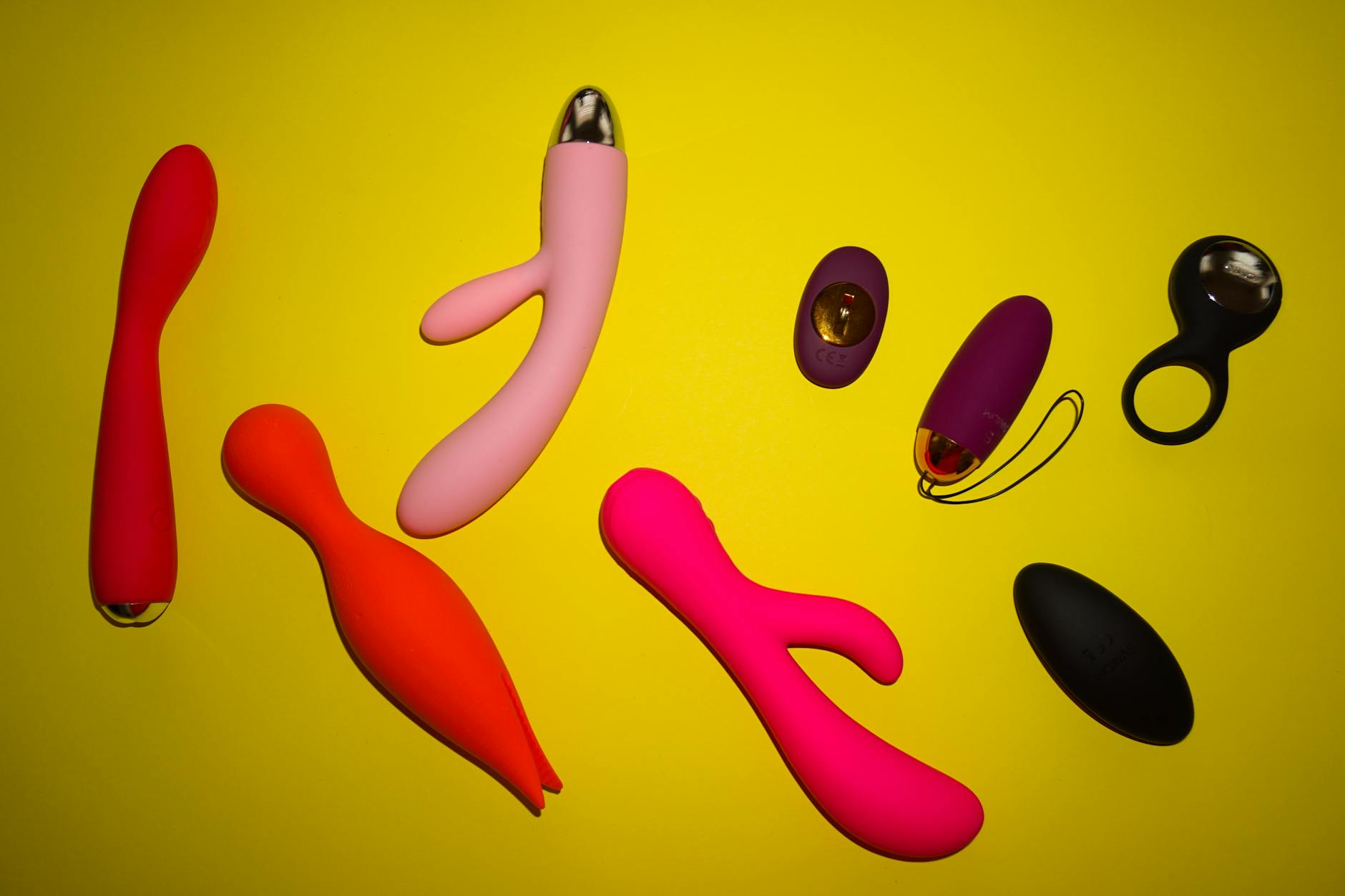
Photo by DRT.fm on Pexels
Why a lemon clitoral vibrator solves this specific problem
The architecture of a lemon vibrator is designed for precision and control. You're not locked into one intensity level. The Lem's patterned stimulation can be engaged across multiple settings, which means partners with different thresholds can find their own sweet spot without compromising the other person's experience.
Here's what makes this different from finger stimulation or older vibrator designs: the lemon vibrator delivers consistent, variable-intensity sensation without the fatigue factor. One partner isn't exhausted from holding the vibrator in exactly the right spot for twenty minutes. One partner isn't white-knuckling through overstimulation. Both get to be present instead of managing pain or frustration.
The key is that lemon adult toys give you the option to start low and build, or to maintain a gentle pattern throughout. You're not choosing between "vibrator on" and "vibrator off." You're choosing which pattern, which intensity level, and for how long.
The conversation that has to happen first
Before you introduce the lemon sexual toy into partnered sex, you need to have a conversation that most couples avoid entirely. Not during sex. Not during an argument. During a calm moment, maybe over coffee, where you can talk about this without it feeling like criticism.
The opening line matters. Try: "I've noticed that what feels amazing to me sometimes feels like too much to you, and I want to fix that. Not by changing what you need, but by finding a way we both actually enjoy this." That's not accusatory. It's problem-solving as a team.
Then ask directly: "When I use this intensity level, what's happening in your body? Is it numb, or is it too much?" You're gathering data, not defending yourself. The answer determines everything.
If they say "too much," they likely have a lower sensory threshold. Start at settings 1-2. Build slowly. Gentle patterns matter more than high power.
If they say "nothing," they need higher input. Patterns 5-7. Sustained stimulation. Faster build.
Both answers are valid. You're just finally speaking the same language.
How to use the lemon vibrator when one partner prefers gentleness
If your partner is the low-threshold type, intensity is not your friend. Start at the lowest setting and stay there for longer than feels intuitive.
Many people make this mistake: they think "gentle" means weak or boring. It doesn't. Gentle means sustained, pattern-focused stimulation at a lower frequency. Think of it as building a long, slow fire instead of striking a match.
With the lemon clitoral vibrator, this means: begin at pattern 1 or 2, use consistent circles or back-and-forth motion, and let the session last 20-30 minutes. The goal isn't speed. It's sustained, building sensation that allows their nervous system to feel safe and aroused at the same time.
One specific tip: ask them to guide the position. "You show me where the vibrator feels best." This removes the guesswork and keeps them in control. If someone is managing overstimulation anxiety, control is medicine.
How to use the lemon vibrator when one partner craves intensity
If your partner is the high-threshold type, gentle touch will feel like nothing. Don't apologize for that. Work with it.
Start with patterns 5-7. Use direct clitoral stimulation rather than surrounding tissue. Sustained, repetitive motion rather than varied patterns. The goal is "let me feel this everywhere," not "let me feel nuance."
Many high-threshold partners also love the combination of clitoral stimulation plus internal stimulation (fingers, a partner, or a different toy). The lemon vibrator can be one layer of a more complex sensory experience, not the only sensation happening.
Duration matters too. They might need 15-20 minutes just to build arousal. Don't interpret that as a reflection on attraction. It's just their nervous system's baseline. Once they're warmed up, intensity can rise significantly, and they might come quickly once they get there.
The most important thing: using it together, not as a substitute
When partners have mismatched pleasure preferences, the biggest risk is that one person starts using the lemon vibrator alone while the other partner watches or waits. That reinforces the idea that the toy is solving a problem in the relationship, not enhancing it.
Instead, make the toy part of partnered sex. One partner can use the lemon vibrator on the other while kissing them, or touching them in other ways. Or one partner can use it while the other provides internal stimulation. The toy is a tool that's being wielded together, not a workaround.
This distinction matters because it keeps pleasure collaborative. You're not solving "my partner doesn't satisfy me" with a device. You're both building something that works for two different nervous systems at the same time.
FAQ
Can we use the same lemon vibrator if we have different sensitivity levels?
Yes. The beauty of a lemon clitoral vibrator is that it has multiple intensity and pattern settings. Start at different levels, and each partner can customize the experience to their nervous system. You might begin at pattern 3, while your partner uses pattern 6. The toy adapts to both of you.
What if we try this and one partner still feels unsatisfied?
That usually means the conversation didn't go deep enough. Unsatisfaction often masks a different issue: maybe one partner feels criticized, or maybe the pleasure preference is being misread. Go back to the calm conversation. Ask: "What's actually not working?" Sometimes it's not intensity. Sometimes it's timing, positioning, or something entirely separate that got tangled up in sex.
Is using a toy during partnered sex normal?
Yes. Partners use toys during sex all the time, especially when bodies have different needs. It's not a sign that someone isn't attracted to you. It's a sign that you're both smart enough to use the right tool for the job.
How do we avoid one partner feeling left out if we're using a lemon vibrator?
Involvement is key. If you're using the lemon sexual toy on your partner, that's active participation. You're choosing the intensity, the pattern, the pressure. You're watching their response. If your partner is using it on themselves while you provide other touch, you're still connected. The toy is adding sensation, not replacing you.
What if my partner is worried the vibrator means they're not enough?
Talk about it directly. Say: "I love being with you. And I also have a nervous system that needs something different. This isn't about you. It's about both of us getting to feel amazing." That's honest, and it's kind. If they're still struggling, couples therapy can help untangle the insecurity from the practical issue.
How often should we use the lemon vibrator for partnered sex?
As often as feels good. Some couples use it every time. Some use it occasionally. There's no "should." What matters is that both partners feel present and want to be there. If it becomes obligatory for one person, it stops working. Keep talking, keep checking in, keep adjusting.
What pleasure really looks like when preferences are different
The honest part: when you stop fighting about how much intensity "should" feel good and instead build around what actually does feel good, sex becomes easier. You're not spending half the time managing someone else's discomfort. You're both present. You're both aroused. You both come.
A lemon vibrator doesn't magically fix mismatched preferences. But it does give you a tool that lets two different nervous systems meet in the same space. And that changes everything.
If you want to explore this further with your partner, start the conversation before you buy anything. We have resources, guides, and real talk about how couples navigate pleasure differently. Because your pleasure preferences aren't a problem to solve. They're just part of who you are.