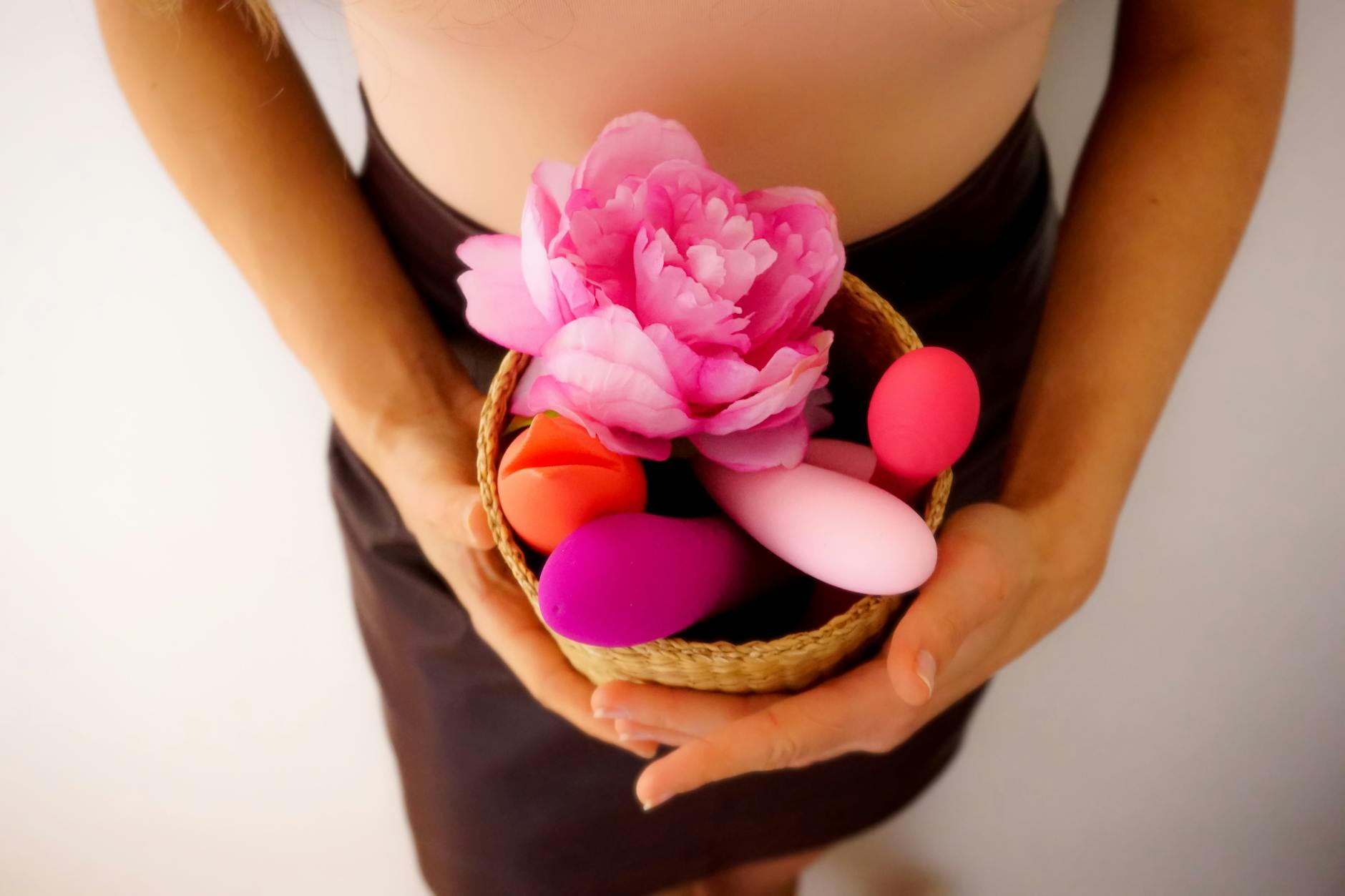
Let's talk about what your cycle is actually doing
Here's what nobody tells you clearly: arousal is not a flat line. It rises and falls across your cycle, and that's not a sign something is broken. It's biology doing exactly what it's supposed to do.
During the follicular phase (the roughly two weeks after your period starts), estrogen climbs. Your body feels more responsive, more sensitive to touch, and arousal tends to build faster. The luteal phase, after ovulation, brings progesterone into the picture, which can make arousal slower to ignite but sometimes deeper once it arrives. Ovulation itself? That's often a peak moment for desire.
The catch: most people are using one approach to pleasure all month, expecting the same response every time. Then they assume their body has stopped working.
Why your lemon vibrator behaves differently depending on the phase
A lemon clitoral vibrator (or any quality lem vibrator) works with sensation. But sensation changes. During high-estrogen phases, your clitoral tissue is plumper, more engorged, more reactive to suction and vibration. You might find you need less intensity to feel a lot. During luteal phases, when progesterone is dominant, tissue can feel less responsive. That doesn't mean it's numb. It means you might need to warm up longer or use a slightly higher intensity.
The suction mechanism on a lemon sucker is particularly responsive to these shifts because it relies on clitoral engorgement. When tissue is well-vascularized (follicular phase, ovulation), the seal feels better and the sensation registers faster. When progesterone is higher and tissue is less engorged, you're creating the same suction with slightly less dramatic responsiveness.
This is normal. It's not a defect in the toy or in you.
Follicular phase: faster, lighter, more frequent
The follicular phase is roughly days 1 to 13 of your cycle (with variation). Estrogen is rising, and with it comes faster arousal and higher baseline sensitivity.
During this window, many people find they can reach orgasm more quickly, and they often crave more intensity than they do later in the cycle. If you're using a lemon vibrator during the follicular phase, you might start on a lower pattern setting and find it's plenty. Some people in this phase enjoy using a clitoral vibrator more frequently, sometimes even daily, because recovery time is shorter and sensation feels sharper.
One practical tip: use the follicular phase as your exploration window. Want to test a new pattern? Want to see what happens if you apply suction for longer before adding vibration? This is when your body is most forgiving and responsive. What you learn in the follicular phase can inform how you adapt later.
Ovulation: the brief peak
Ovulation typically happens around day 14, and it's often a brief window where arousal and sensation spike. Many of my clients report this is their easiest day to reach orgasm across the entire month.
If you notice a day or two where a lemon clitoral vibrator feels like it's delivering maximum sensation with minimal effort, you're probably ovulating. Take note of that day and use it as your baseline for intensity. On other days, if something doesn't feel quite the same, you're probably just comparing it to your ovulation peak, not to actual dysfunction.
During ovulation, some people find they enjoy longer sessions because sensation feels heightened. Others prefer shorter, more intense bursts. Listen to what your body is asking for in that window. It's valuable data.
Luteal phase: slower warmup, often deeper pleasure
The luteal phase spans roughly days 15 through 28 (with variation). Progesterone rises, and with it comes a shift in how arousal works.
Most people need more time to warm up. You might need 15 to 20 minutes of foreplay or solo exploration before a lemon vibrator even registers strongly. That sounds frustrating, but here's the thing: once you do warm up, many people report deeper, more full-body orgasms during this phase. It's not better or worse. It's different.
With a clitoral vibrator during the luteal phase, consider these adjustments:
- Start earlier. Give yourself time to build arousal before introducing the toy.
- Use a slightly higher pattern if the lower ones feel muted. You're not being "too sensitive" or "less horny." Tissue is just less engorged.
- Pair it with other stimulation. Penetration (if that's part of your pleasure), nipple play, or partner touch can help build baseline arousal so the vibrator registers more vividly.
- Consider extending sessions. The luteal phase often rewards patience. Longer sessions sometimes lead to multiple orgasms or longer plateaus that feel intensely satisfying.
When intensity needs to shift
Here's where it gets practical. Most lemon sexual toys have pattern options ranging from lower suction and gentler vibration to more intense combinations. You don't need a different toy for different cycle phases. You need to understand which patterns serve which phase.
Follicular phase tends to thrive on lower to medium patterns. Luteal phase often responds better to medium to higher patterns. But this is individual. Some people are sensitive throughout and prefer gentle patterns always. Others want intensity regardless of cycle phase. Your job is to track what actually works for you, not what I'm telling you ought to work.
One way to do this: keep a simple log for two cycles. Note the day of your cycle (counting day 1 as your first day of bleeding) and which pattern felt best. After two months, patterns emerge. You'll see when you naturally gravitate toward gentler sensations and when you crave more intensity.
Mental arousal matters as much as physical
Cycle shifts affect not just physical sensation but mental engagement with pleasure. During the follicular phase, many people find they're more drawn to novelty, external stimulation, or partner involvement. During the luteal phase, some people prefer solo time, internal focus, or longer, slower sessions.
This is worth naming because a lot of people blame their lemon vibrator or themselves when really their brain is just asking for something different. If you're forcing yourself into a 5-minute quickie during your luteal phase because that's what "worked" during your follicular phase, you're fighting biology.
Consider letting your approach to pleasure shift with your cycle in other ways too. Maybe follicular weeks are for trying new patterns or partnered play. Maybe luteal weeks are for longer solo sessions or more emotional intimacy with a partner before any toy comes out.
Tracking and planning
If you want to be strategic about this, use a period tracker app or a simple calendar. After two or three cycles, you'll see your personal rhythm. Some people even pre-plan their pleasure. They know that days 15-20 are their "more time needed" window, so they block out 30 minutes instead of 10. They know days 5-12 are their "high response" window, so that's when they try new patterns on their lemon clitoral vibrator.
This isn't rigid or robotic. Stress, sleep, relationship dynamics, and a thousand other factors still matter. But having a general map means you stop blaming yourself for "losing" arousal that actually just shifted.
When to reach out for support
If arousal is completely absent across all phases, or if it's so extreme in one direction that it's distressing, that's worth discussing with a healthcare provider. Hormonal birth control can flatten arousal across the cycle. Thyroid dysfunction, vitamin deficiencies, and other medical factors can tank desire overall.
But if you're noticing natural variation—fast some weeks, slower others—that's not a problem. That's a body doing what bodies do. A lemon vibrator that works with your cycle, not against it, is exactly what you need. These clitoral vibrators are designed to adapt to different levels of engorgement and responsiveness, which means they're actually built for cycle variation.
People also ask
Can my cycle affect how my clitoral vibrator works?
Absolutely. During high-estrogen phases like the follicular period and ovulation, clitoral tissue is more engorged and responsive to suction and vibration. During the luteal phase when progesterone is higher, tissue may be less vascularized, which can make stimulation feel less intense. This isn't a flaw in you or the toy. It's physiology. The same lemon vibrator will feel different across your cycle because your body is actually changing.
Should I use my lem vibrator less during my period?
There's no medical reason to avoid using a clitoral vibrator during your period. Some people feel more sensation or orgasm more easily during menstruation because of increased blood flow to the pelvic area. Others prefer to skip penetrative play during their period but still enjoy clitoral stimulation. Use a water-based lubricant if you're using a toy vaginally, and change the toy or wash your hands between any contact with blood and other areas. Otherwise, your period is not off-limits.
Why does my lemon clitoral vibrator feel numb sometimes?
If a lemon sucker suddenly feels less intense, consider your cycle phase first. Lower progesterone during the luteal phase can reduce clitoral engorgement, making suction and vibration feel more subtle. You're not becoming desensitized. Your arousal window has just changed. Try warming up longer, using a slightly higher pattern, or coming back to the toy in a different phase. If numbness persists across all cycle phases, that's worth discussing with a healthcare provider.
Can I rely on my cycle to predict when I'll orgasm?
Your cycle can give you general guidance, but it's not a guarantee. Ovulation is typically a high-sensitivity window, and the follicular phase is usually more responsive than the luteal phase. But stress, sleep quality, how you feel in your body that day, and what's happening in your relationship all matter. Use your cycle as context, not as law. Track your own patterns over a few months to see what actually rings true for you.
Is it normal for arousal to drop in my luteal phase?
Very normal. For many people, arousal is naturally lower during the luteal phase due to higher progesterone and lower estrogen. Some research suggests sexual interest drops 20-30% in this phase for many people. If your baseline arousal drops but you can still reach orgasm with more warmup time, that's a cycle variation, not dysfunction. If arousal disappears entirely or causes distress, talk to your doctor.
What lemon adult toy should I use if my arousal varies so much?
A quality lemon clitoral vibrator like the Lem works across cycle phases because it offers multiple pattern options. Lower patterns work for high-sensitivity phases, and higher patterns work when you need more intensity. You don't need different toys. You need one reliable lemon sexual toy with enough pattern variety to meet you wherever your cycle is. Invest in one good clitoral vibrator rather than multiple toys.
The real thing to know
Your cycle isn't a bug in your pleasure. It's a feature. If you're tracking your cycle and noticing arousal patterns, you're actually developing sexual self-awareness that a lot of people never get. You're learning when your body naturally wants intensity and when it wants slowness. A lemon vibrator is just a tool that makes it easier to honor those shifts.
Stop waiting for arousal to be flat and consistent. Work with the reality of your body. Once you do, everything—including how a clitoral vibrator works—starts to make sense.
If you want to dive deeper into how your body responds to pleasure across different seasons and situations, reach out.