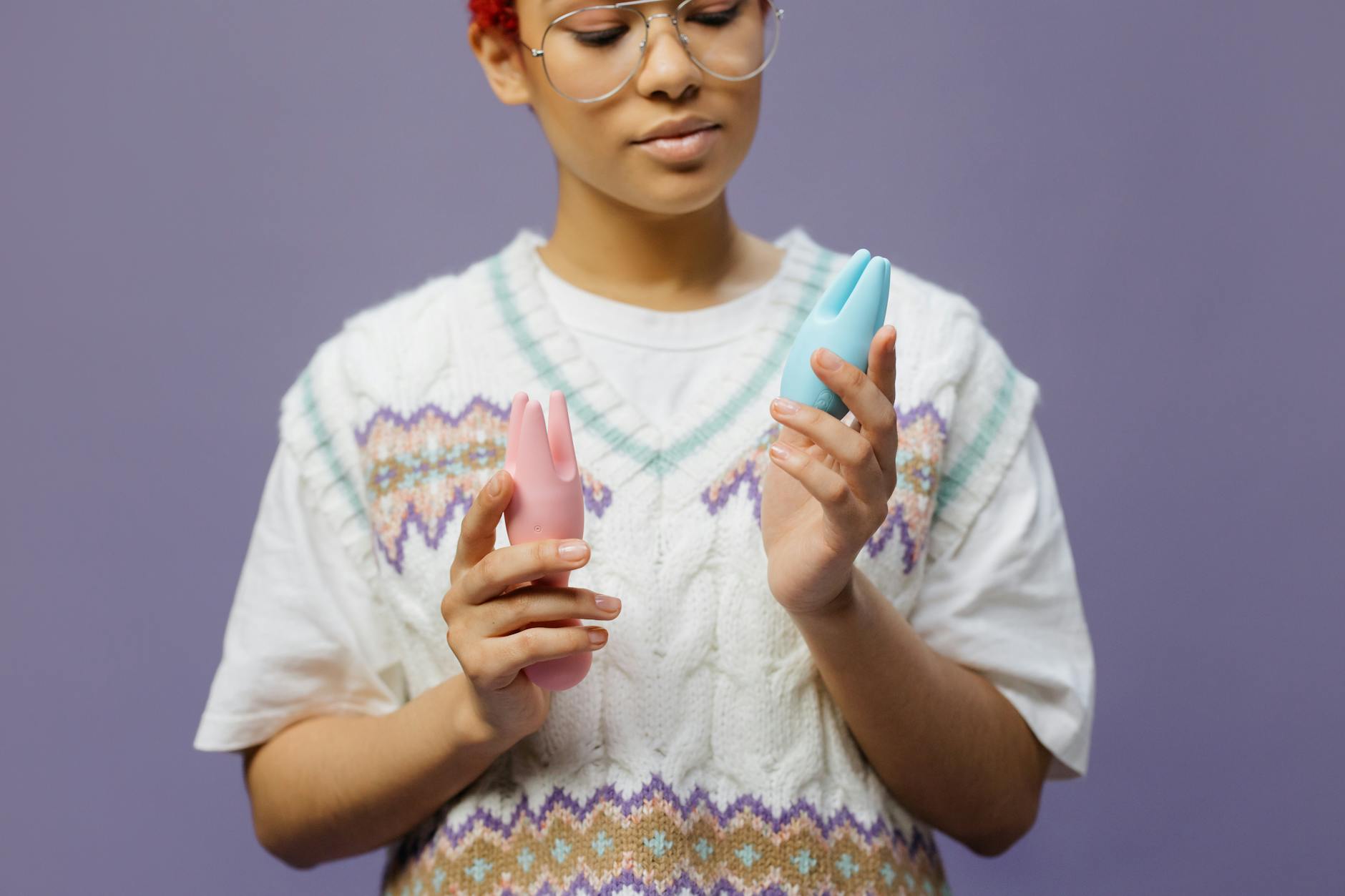
How to Use a Lemon Clitoral Vibrator When Partners Reconnect After a Relationship Gap
Time apart doesn't end desire, but it does reset the rhythm. Here's how a lemon vibrator becomes the bridge back to shared pleasure when you're picking up where you left off.
Let's be real: after months or even years of physical distance, your bodies aren't strangers. But they're not quite familiar anymore either. The muscle memory is there, but so is the uncertainty. You both want to reconnect, but there's an awkward pause where it used to be seamless.
This is where most couples get stuck. They either push too hard (expecting instant chemistry) or move too cautiously (avoiding pleasure altogether). A lemon clitoral vibrator short-circuits that entire stalemate. It removes the pressure to perform and gives you both permission to go slowly.
Time apart does real physiological things. Arousal takes longer to build when you haven't touched regularly. Pelvic floor muscles tighten from disuse. Anxiety can numb sensation even when desire is genuinely there. And emotionally, reconnection carries a different weight than maintenance sex, which can make both partners overthink the moment.
The lemon vibrator solves three of these problems at once:
It removes the pressure to match each other's pace. If your partner usually takes 20 minutes to warm up and you used to need 8, those differences feel more pronounced after time apart. A lemon clitoral vibrator means pleasure isn't contingent on synchronization.
It gives your body permission to respond at its own speed. After a gap, some people worry they've "lost it." Using a vibrator reintroduces sensation in a low-stakes way, proving to your nervous system that arousal still works.
It creates a shared focus. Instead of navigating the weird emotional weight of "are we still compatible?", you're both focused on a concrete, pleasurable task. It shifts the conversation from "us" to "this feels good."
Honestly, start here: "I want to use a lemon vibrator together. Not instead of you. Alongside you." That distinction matters because a lot of partners hear "vibrator" and feel replaced. You're not replacing anything. You're adding a tool.
Talk about what you each need from reconnection. One partner might need emotional intimacy first (lots of conversation, non-sexual touch). The other might need physical sensation to feel emotionally safe again. Neither is wrong. A lemon vibrator lets you meet both needs because it can be intimate without requiring the exact same arousal timeline.
Also ask: what does "going slow" mean to each of you? For some couples, slow means 10 minutes. For others, it means building over several encounters. There's no universal slow. Get specific.
First time: one partner uses it on themselves while the other person is present but not performing. This sounds oddly clinical, but it's genius. It removes the pressure for the receiving partner to "do this right," and it gives the other partner a chance to watch, learn what feels good, and genuinely relax.
Start at pattern 1 or 2 on the lemon vibrator. Low intensity. The goal isn't orgasm, especially on the first reconnection. The goal is "my body still responds, and that feels good." Let it take 20, 30, 40 minutes. No rush.
After a few solo or partner-watched sessions, the receiving partner can take over control. Hand the lemon sucker to them and let them guide where it touches and how long it stays. This is crucial for rebuilding confidence because they're not performing for you; they're discovering what their body wants.
Only after that do you move to partner-controlled use, where your partner is directing the vibrator on you. And honestly, even then, keep your hand in the loop. You guide together.
After time apart, sensitivity often swings in one of two directions. Some people become more sensitive because their nerve endings have been "waking up." Others go numb because anxiety or tension is still sitting in their pelvis.
If sensation feels too intense: start with the lemon vibrator on the lowest pattern and use it over underwear first. Let your body adjust gradually. You're not broken if it feels overwhelming. Your nervous system just needs permission to settle.
If sensation feels dulled or absent: layer sensation. Use the lemon vibrator on your own, without your partner watching, for a few sessions first. No pressure. This helps your body remember what pleasure feels like in a low-stakes context. Then gradually reintroduce your partner's presence.
Here's something most couples skip: talking during sex after a gap. It feels awkward because you used to have a rhythm without words. But the rhythm changed. Your bodies changed. Talking isn't a sign of lost connection; it's the bridge back to it.
Simple things: "That feels good," "A bit slower," "Let's take a break." Not hot, technically. But wildly connecting because you're both choosing presence over performance.
A lemon vibrator actually makes this easier because it's a neutral object. You're not commenting on each other's bodies or abilities. You're collaborating on something external.
Sometimes reconnecting reveals a gap you didn't have before the time apart. One partner's libido might have shifted. The other might have changed their comfort with certain kinds of touch. That's real and worth addressing.
A lemon clitoral vibrator doesn't fix mismatched desire. But it can buy you time and information. By using it together, you get to discover what your individual bodies want separate from the pressure to match your partner. That clarity is valuable, even if what you discover is that your desires have genuinely diverged.
If that's happening, a conversation with a couples therapist is worth it. Real reconnection sometimes means renegotiating what pleasure looks like together.
After a few weeks of reconnecting with the lemon vibrator, something shifts. You start remembering what your partner's presence feels like. Your body starts expecting pleasure rather than bracing for awkwardness. The vibrator becomes background, and the two of you become foreground again.
This is when you can decide: do you want to keep using it regularly, or does it become something you pull out occasionally? Either choice is fine. There's no graduation away from it. Some couples use lemon vibrators for years as part of their regular intimacy. Others use them for a season of reconnection and then move on. Both patterns are healthy.
What matters is that you're choosing it together. You're not using it to paper over a real problem. You're using it as a tool to rebuild something that was interrupted but not broken.
There's no timeline. Some couples need three reconnection sessions before bringing in a tool. Others need three months. The marker is when both partners feel emotionally safe enough to be vulnerable. If either of you is still negotiating trust, a vibrator isn't going to help. Get that foundation first. Once you're both showing up consistently and your touch feels genuine (not obligatory), then a lemon vibrator can enhance what's already building.
This is common after a gap because some partners interpret a vibrator as "I'm not enough." The way through is honesty. "I want to use this because it helps me relax into pleasure with you. It's not about replacing you. It's about making space for both of us to feel good." If they're still resistant after that conversation, respect it. You can't force them to be comfortable. But you also don't have to abandon your pleasure. Maybe start with non-partnered use and let them watch how it helps you reconnect with your own body. Sometimes seeing that shift opens the door.
Not directly. But here's what it does: it creates consistent moments of vulnerability and trust. Every time you use it together, you're showing each other "I'm letting you see me want pleasure." That builds emotional intimacy over time. Physical reconnection and emotional reconnection are separate processes, but they do run parallel. The more comfortable you get with each other's bodies, the more emotionally safe you typically feel. That said, if the emotional gap is deep (infidelity, broken promises), a vibrator isn't therapy. That needs real work, possibly with a professional.
Same rules apply, just compressed. The time you do have together becomes precious. Use it intentionally. Start with the lemon vibrator in short, focused sessions rather than trying to build a full intimate evening. Your nervous system needs consistency more than duration. Ten minutes together twice a week does more for reconnection than one long session a month. Make the time you have count.
Yes, but go in with clear eyes. You're not using pleasure to decide whether to stay. You're using it to gather information: "When we reconnect physically, do we feel closer emotionally?" If the answer is yes, that's data. If the answer is no, that's also data. Don't let the vibrator become a bandage for a relationship that needs honest conversation about whether both people want to keep showing up.
Gradually. Keep using the lemon vibrator for a few months even as things start feeling normal. Your body and nervous system benefit from consistency. Slowly reintroduce other kinds of touch and pleasure alongside it. The vibrator doesn't need to disappear; it just becomes one option in your toolkit rather than the main event.
A lemon clitoral vibrator is a tool, not a magic fix. But it's a specific kind of tool: one that removes performance pressure and lets both partners focus on sensation instead of synchronization. After time apart, that shift alone can be transformative.
The real work is showing up consistently, talking honestly about what you need, and choosing each other even when desire feels like a stranger. The vibrator just makes that work easier and more pleasurable.
If you're rebuilding intimacy after a gap, start there. Get the conversation right, lower the pressure, and let your bodies remember what they know. Everything else follows.