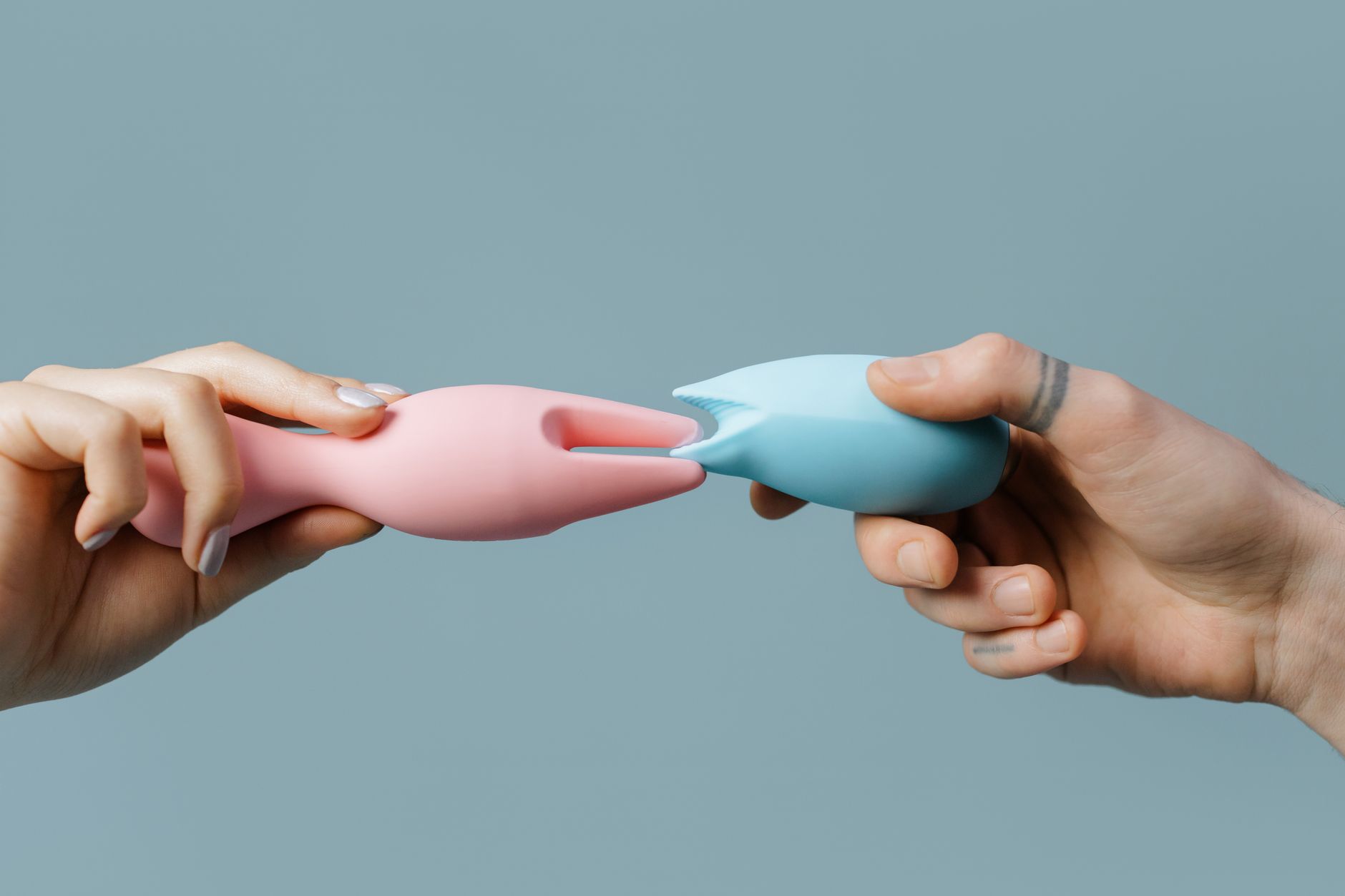
Let's talk about the mismatch that's sitting in your bedroom right now
Desire discrepancy is one of the most common relationship complaints I hear. One partner is ready to go; the other needs time, or isn't interested, or is interested on a completely different schedule. And here's the thing nobody says out loud: it's not a problem you solve by "communication" alone. Sometimes you need a tool that meets both people where they actually are, not where they think they should be.
A lemon vibrator, or any clitoral vibrator, can be that tool. But only if you pick the right one for your specific dynamic.
Why mismatched desire happens (and why it's not a relationship crisis)
Desire rarely matches perfectly in long-term partnerships. One person has a naturally higher libido, or their circadian rhythm favors morning sex while the other peaks at night, or one partner had a lower baseline to begin with. Sometimes life stress, hormonal changes, or medication shift the balance. None of these are failures. They're just facts about being two separate humans.
The problem isn't the mismatch itself. The problem is what couples usually do about it: the higher-desire partner feels rejected, the lower-desire partner feels pressured, and both shut down. A vibrator can interrupt that cycle by changing the texture of the experience. When penetration or hand stimulation feels like an obligation, adding a clitoral element that the lower-desire partner actually enjoys can flip the dynamic from "I have to" to "I want to."
The three patterns that matter when choosing
Pattern 1: One partner wants more, the other less. The lower-desire partner often avoids initiating because they know it'll lead somewhere they're not sure they want to go. A lemon vibrator lets them stay in control of intensity and pacing. You're choosing for ease of communication and speed of arousal.
Pattern 2: One partner reaches orgasm easily, the other doesn't. If one of you climaxes in five minutes and the other needs twenty, that's a setup for performance pressure. A clitoral vibrator (especially one with adjustable intensity, like the Lemon Clitoral Vibrator) lets the slower partner get what they need without the faster partner going numb waiting.
Pattern 3: One partner wants novelty, the other wants comfort. Higher-desire partners sometimes want more variety or adventure. A vibrator can scratch that itch for experimentation while still feeling intimate and connected.
What to look for in a lemon vibrator for your specific dynamic
If the lower-desire partner is your starting point:
You want a vibrator that feels like foreplay enhancement, not a whole new activity. Look for something intuitive, quiet, and with a learning curve of about thirty seconds. The Lemon Clitoral Vibrator hits this sweet spot: simple button interface, whisper-quiet operation, and a size that doesn't feel like an announcement. The lower-desire partner can use it solo first to understand what actually turns them on, then bring it into partnered sex on their own terms.
Speed of arousal matters too. If your partner takes longer to get interested, a vibrator that builds sensation gradually (rather than jumping to high intensity) prevents that jolt of overstimulation that kills desire before it starts.
If the higher-desire partner is your starting point:
You probably want something that enables longer sessions and varied sensation. A rechargeable vibrator with multiple patterns lets you explore without the dead-battery anxiety that kills momentum. Some couples use a vibrator during partnered sex to intensify what's already happening, then transition to other activities. This keeps the higher-desire partner satisfied while the lower-desire partner stays engaged instead of checked out.
If the gap is about orgasm timing:
This is where clitoral vibrators genuinely excel. If your partner reaches orgasm much faster than you do, a vibrator designed for direct clitoral stimulation means you're both getting what you need in the same encounter, without anyone feeling rushed or waiting. That removes the ambient pressure that usually kills arousal for the slower partner.
The conversation you need to have before buying anything
Here's what I tell couples in my practice: pick the vibrator together, or at least talk about it first. Not as a "your body isn't enough" message. Frame it as a tool to help both of you enjoy the time you're spending together.
The conversation might sound like this:
"I've noticed we have different amounts of time we need to get aroused. I want us both to feel good, not like we're on a clock. Would you be open to trying something that might help us both get what we need without the pressure?"
Or: "I love having sex with you. I also want it more often than you do. I'm wondering if there's a way to make it feel better for you when we do have time together."
The lower-desire partner should get to choose the vibrator, or at least have veto power. This isn't about the higher-desire partner solving them. It's about creating space where both people want to show up.
How to actually use it in the context of desire mismatch
Don't lead with the vibrator. That feels like: "We have a problem, here's the solution." Instead, integrate it gradually.
Start with solo use. The lower-desire partner experiments alone, no audience, no pressure to perform. They learn what actually feels good, what patterns work, what doesn't. This data is gold when you return to partnered sex.
Then introduce it during foreplay. Not as a replacement for hand or mouth, but as an addition. You're not abandoning intimacy. You're enhancing it. The lower-desire partner gets faster arousal, clearer sensation, and a sense of control. The higher-desire partner gets to participate in something that's visibly working.
Finally, use it as a bridge. Some couples find that vibrator-assisted foreplay makes the lower-desire partner aroused enough to want penetration or other activities. Others find that's the endpoint and that's completely fine. The goal isn't a particular sexual menu. The goal is both people feeling good about the time you're spending together.
The settings that make the difference
When desire mismatches exist, pacing becomes crucial. Look for a vibrator with at least three intensity levels. Start low. I mean genuinely low, not "low by manufacturer standards." The lower-desire partner should be able to build sensation at their own pace without surprise jumps in intensity.
Pattern variety matters too, but only if the lower-desire partner is curious about it. If they're not interested in experimentation, a single solid pattern is fine. Forced variety feels like pressure.
Quiet operation matters for one specific reason: partner awareness. If you're aware of a loud vibrator, it breaks the moment. The lower-desire partner especially needs to stay in their body, not thinking about the logistics of the device.
When to involve a therapist
If the desire mismatch is more than 2-3 occurrences per week, or if one partner consistently feels rejected and the other consistently feels pressured, a vibrator alone won't fix it. Something else is probably happening: resentment, unresolved conflict, or a significant change in health or medication that's shifting desire.
A therapist who specializes in couples work can help you figure out whether this is a mismatched baseline (which is fine and manageable) or a symptom of a deeper disconnect. One points toward tools and communication. The other points toward deeper repair work.
The actual math of desire mismatch
Here's something I tell couples that often surprises them: research shows that couples who use vibrators together report higher satisfaction and lower frequency of sexual conflict. Not because vibrators are magic. Because using one requires explicit consent, communication, and presence from both partners. You can't accidentally slip into a vibrator. Both people have to be part of the choice.
When you choose a lemon vibrator together for mismatched desire, you're also choosing to have a conversation about desire. That conversation is actually the healing part. The tool just makes it possible.
The shift that happens
Most couples I work with find that when desire mismatch stops feeling like a problem and starts feeling like logistics, something softens. The lower-desire partner isn't defending their body. The higher-desire partner isn't taking it personally. You're both just trying to figure out how to spend time together in a way that works.
A clitoral vibrator won't fix a broken relationship. But it can shift a relationship where both people want connection but can't quite sync up. It's an "and" tool, not a "but" tool. You both want intimacy. And maybe a lemon vibrator helps you get there.
FAQ
Can using a vibrator replace physical intimacy with my partner?
No, but that's also not what vibrators are for. They enhance what's already there or make existing activities feel better for both people. If someone is using a vibrator instead of touching their partner, that's a different conversation. It's about presence and desire, not the device.
Will my partner be offended if I suggest using a vibrator because of our desire mismatch?
Possibly, if the framing makes them feel like they're not enough. But research shows that 70% of couples who discuss it openly before purchasing find it improves their sex life. The conversation matters more than the vibrator. Lead with "I want us both to feel good" not "We have a problem."
What if one of us has zero interest in vibrators?
Then a vibrator isn't the answer to this particular problem. It becomes about other tools: scheduling sex, exploring different types of touch, addressing underlying relationship dynamics, or working with a therapist. Some desire mismatches need structural solutions, not product solutions.
How do I know if I'm buying the right vibrator for our mismatch?
Ask yourself: Does this vibrator make it easier for the lower-desire partner to access pleasure? Is it intuitive enough that it doesn't create new friction? Can both people control it comfortably? If yes to all three, it's probably right. If you're buying based on what looks good in a photo, you've got the wrong criteria.
Is it true that vibrators cause desensitization?
Not in the way people fear. Using a vibrator doesn't permanently numb your clitoris or make other touch feel boring. What can happen is that someone becomes accustomed to a specific intensity level and needs time to recalibrate to other sensations. That's reversible. Some variation in stimulation (switching between vibrator and hand, changing patterns, taking breaks) prevents this.
Can a vibrator help if we're in a long-distance relationship with different desire levels?
Yes, especially if you're trying to make visits count. A vibrator can intensify the time you do have together and take pressure off because you don't have to solve the whole mismatch in one weekend. That said, long-distance already creates its own complications. The vibrator is a bonus, not a solution to the underlying challenge of being apart.