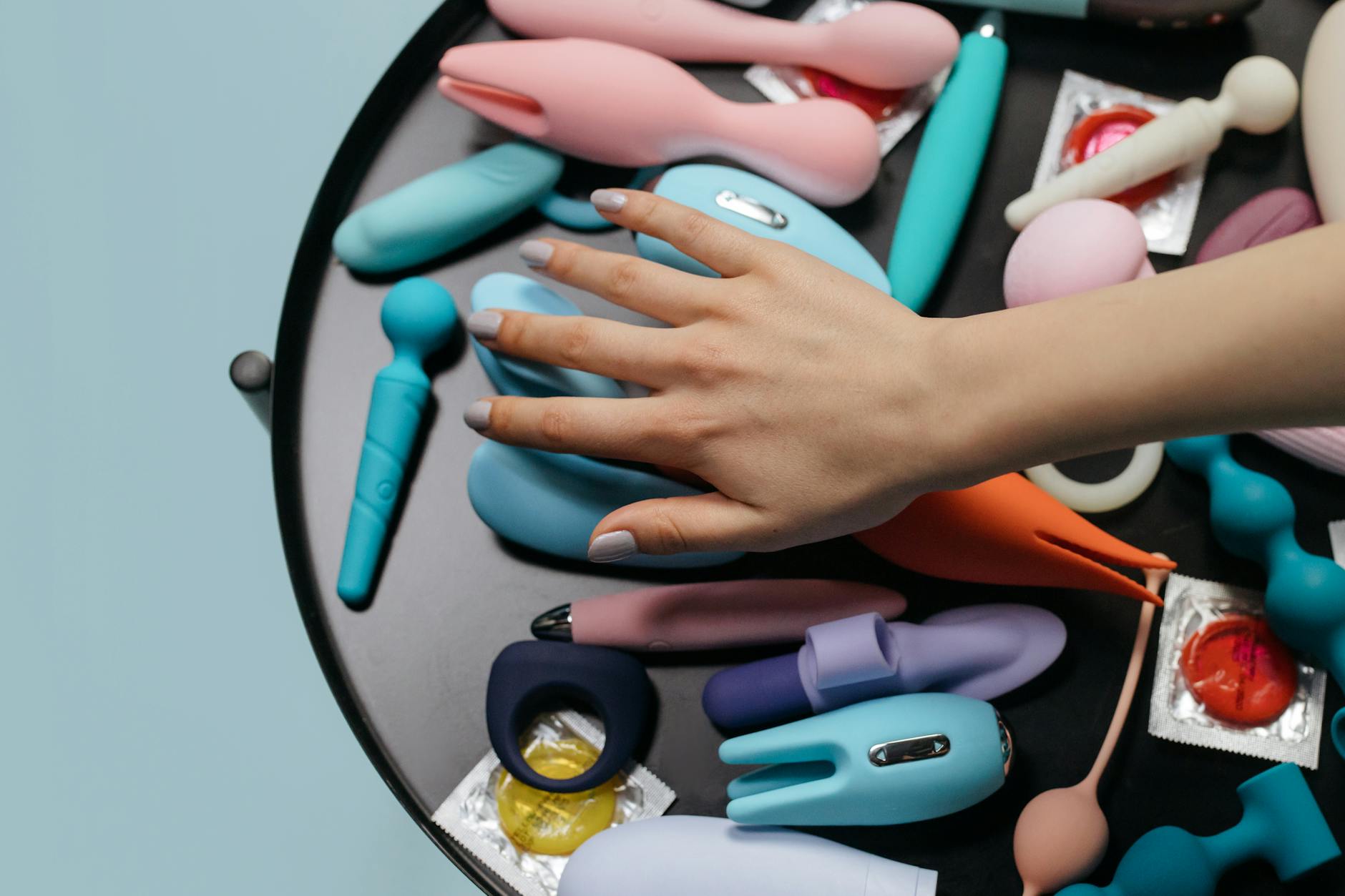
Here's what nobody tells you about clitoral sensitivity after 30
Your clitoris didn't become less sensitive. What changed is that the kind of stimulation that worked at 22 stopped working at 32. That's not a loss. That's data. And once you know how to read it, you can dial in settings that feel exponentially better than anything you had access to before.
I work with people across their 30s, 40s, and beyond, and the pattern is consistent: they assume something's wrong with them when really, their bodies are just asking for something more thoughtful. A lemon clitoral vibrator gives you that precision. But you have to know which settings to use.
Why intensity tolerance shifts in your 30s
Three things happen physiologically that most people don't connect to sensitivity changes.
First, nerve endings don't actually get less sensitive. What changes is how your nervous system processes stimulation overall. After 30, your body starts filtering sensation more carefully. It's not dampening pleasure. It's refining it. Your nervous system is literally getting pickier about what deserves your attention.
Second, hormonal rhythms deepen. If you menstruate, your sensitivity varies more dramatically across your cycle by your 30s than it did in your 20s. That same vibrator setting that feels perfect on day 10 might feel too intense on day 21. This isn't random. It's biology with structure.
Third, pelvic floor tension increases subtly. Stress, posture, and accumulated tension from years of sitting tighten the pelvic floor in ways that make direct, high-intensity stimulation feel overwhelming. It's the tightness, not the clitoris, that's the bottleneck.
Why your lemon vibrator's lower settings often feel better
A lemon vibrator works differently than most clitoral vibrators because it uses suction and gentle pulsing instead of high-frequency buzzing. This design matters enormously for sensitivity.
Settings 1 through 3 on a lemon vibrator create a slow, rhythmic suction that stimulates without overwhelming the tissue. Many people in their 30s and beyond find that patterns 2 and 3 deliver orgasms that feel deeper and more located than anything on a higher setting. You're not sacrificing intensity. You're trading rapid surface stimulation for sustained, layered pleasure.
Here's the counterintuitive part: more settings often feels worse. When you jump from pattern 3 to pattern 6, you're not getting more pleasure. You're triggering a protective response in your nervous system. The clitoris literally retracts slightly when overstimulated. So you feel less, not more.
I recommend starting any session with your lemon vibrator at pattern 1 or 2, even if you think that's "too low." Spend 3 to 5 minutes at that setting while you focus on breath and arousal building. Then, if you want to shift up, move to pattern 3 or 4. Most people find orgasm happens around pattern 2 or 3, and when it does, the sensation is richer than what they got from higher settings.
The warm-up principle that changes everything
After 30, foreplay stops being optional. It becomes the core experience.
Set a timer. Spend a full 10 to 15 minutes on indirect stimulation before you ever touch your lemon vibrator to your clitoris. This means touching your thighs, your labia, your whole vulva. Use your hands. If you have a partner, this is their job, and it matters more than penetration.
Once the area is warm and engorged, start on your lemon vibrator at the lowest setting. The tissue is primed now. Pattern 1 feels completely different when you've spent 10 minutes warming up than it does when you go straight for it.
This is not boring. This is how you access deeper sensation. The clitoris doesn't want to be rushed. After 30, it wants to be invited.
Pattern selection matters more than intensity
Most lemon clitoral vibrator models offer 7 to 10 patterns. You don't need to use all of them. You need to find your pattern.
Some people respond best to steady, predictable rhythm (usually a standard pulse). Others want something that surprises them (a staccato or escalating pattern). Still others need a pattern that ramps up gradually (most lemon vibrators have a "build" pattern that starts slow and intensifies over 8 to 10 seconds).
Test patterns during arousal. Spend 2 to 3 minutes on each one. Pay attention to what makes your breath catch. That's not random. That's your nervous system saying yes. Then stick with that pattern for the rest of the session.
Many people cycle patterns throughout. You might start on a steady pulse, shift to a staccato at minute 7, then move to the build pattern as you get closer to orgasm. This variation keeps sensation interesting and prevents desensitization.
Positioning shifts that reduce sensitivity fatigue
How you hold your lemon vibrator changes the sensation profile completely.
Direct contact at the tip of the clitoris is the most intense setting. If that's uncomfortable, back the vibrator off slightly so it's stimulating the shaft or the broader clitoral mound instead. You're still getting sensation. It's just distributed differently.
Angle matters too. A slight angle downward (toward the vaginal opening) often feels less intense than straight-on contact. This positioning also engages some of the internal clitoral structures, which can create a different orgasm sensation.
If you have a partner, they can hold the vibrator instead of you. This removes the cognitive load of holding it at exactly the right angle and pressure, which lets you focus on sensation and arousal. It also lets your partner participate more actively, which matters for emotional connection.
Building tolerance (or not) intentionally
Desensitization is real, but it's not inevitable. It's usually a sign that you're using the same setting, pattern, and positioning too frequently.
Rotate what you use. If you typically use pattern 4, spend a week using only patterns 1 and 2. Take a 3 to 5 day break from your lemon vibrator and use your hands instead. Vary your positioning. This keeps your nervous system engaged and prevents your clitoris from habituating to the stimulus.
Some people in their 30s and beyond find that this rotation approach is the difference between pleasure that feels fresh every time and pleasure that starts to feel flat. You're not losing sensitivity. You're maintaining it intentionally.
When sensitivity means something else is happening
If your clitoris feels painfully sensitive or if sensation feels numb even at low settings, you might be dealing with something besides normal age-related changes.
Tight pelvic floor muscles often masquerade as clitoral hypersensitivity. If touching your clitoris directly feels raw or too intense, the issue might be pelvic floor tension, not the clitoris itself. Try pelvic floor relaxation exercises for two weeks before adjusting your vibrator settings. You might find that pattern 3 suddenly feels comfortable when the underlying tension releases.
If sensation feels completely absent, that's worth exploring with a healthcare provider. Antidepressants, hormonal shifts, and certain health conditions can affect clitoral sensation. A menopause-trained doctor or sexologist can help you identify what's happening and whether there's an adjustment that helps.
The mental side of sensitivity after 30
Here's the part nobody talks about: after 30, sensitivity often includes emotional sensitivity.
What I mean is that your clitoris is connected to your mental state more directly in your 30s than it was before. If you're anxious, stressed, or distracted, your clitoris doesn't respond the way it did when you were younger and could orgasm in 90 seconds while thinking about your grocery list.
This isn't a flaw. This is your nervous system getting more integrated. Your pleasure is connected to your presence now. So spend the 10 minutes warming up, choose a pattern that feels right, and actually pay attention to what's happening. The sensitivity shift after 30 is an invitation to slow down and feel more, not less.
FAQ
What lemon vibrator setting should I start with if I've never used one before?
Start at pattern 1 or 2, and spend at least 10 minutes warming up your whole vulva with your hands or a partner's touch before you use the vibrator at all. The first time you use your lemon vibrator, your goal isn't orgasm. Your goal is learning what pattern and setting feel right. Spend time exploring. That investment pays off every time you use it.
Can I use a lemon clitoral vibrator if my clitoris feels too sensitive to touch directly?
Yes. Start on pattern 1 with the vibrator offset slightly from the clitoral tip. You can stimulate the shaft or the broader mound around the clitoris instead. Also try a 3 to 5 day pelvic floor relaxation practice. Many people find that as pelvic floor tension releases, direct clitoral stimulation becomes comfortable.
Does sensitivity change across my menstrual cycle with a lemon vibrator?
Absolutely. Most people find they're most sensitive to direct clitoral stimulation mid-cycle (days 8 to 14) and prefer indirect or lower-intensity stimulation in the luteal phase (days 15 onward). Track what settings feel best on different days and adjust accordingly. You might need pattern 3 mid-cycle and pattern 1 on day 20.
Why does my lemon vibrator feel overstimulating even on the lowest setting?
Check three things: pelvic floor tension (try pelvic floor relaxation exercises), arousal level (spend 15 minutes warming up instead of 5), and positioning (try stimulating the shaft instead of the clitoral tip). If those adjustments don't help, talk to a healthcare provider about whether something like hormonal changes or medication side effects might be affecting sensation.
Should I use patterns or stick to a steady vibration?
Test both. Some people respond better to predictable steady vibration. Others prefer patterns that surprise them or build gradually. There's no right answer. Spend a few sessions experimenting with different patterns and note which ones make your breath catch. That's your answer.
Is it normal for my orgasms to feel different than they did 10 years ago?
Completely normal. Orgasms often shift after 30 in terms of intensity, location, and duration. Some feel more focused. Others feel more full-body. Many people report that orgasms after 30 feel emotionally different, even if the physical sensation is similar. This isn't loss. It's change. Most people find the new sensation more satisfying, not less.
What you really need to know
Your clitoris after 30 isn't damaged. It's not less capable. It's more discerning. That sensitivity shift you're experiencing isn't the beginning of decline. It's the beginning of knowing exactly what you want and being willing to ask for it. A lemon vibrator paired with the right settings, warm-up time, and intentional pattern selection lets you access that knowledge and feel incredible every time.
The best setting isn't the highest one. It's the one that makes you feel most like yourself.
Ready to explore what works for your body? Get in touch with questions about technique, sensation, or anything else. We're here to help.